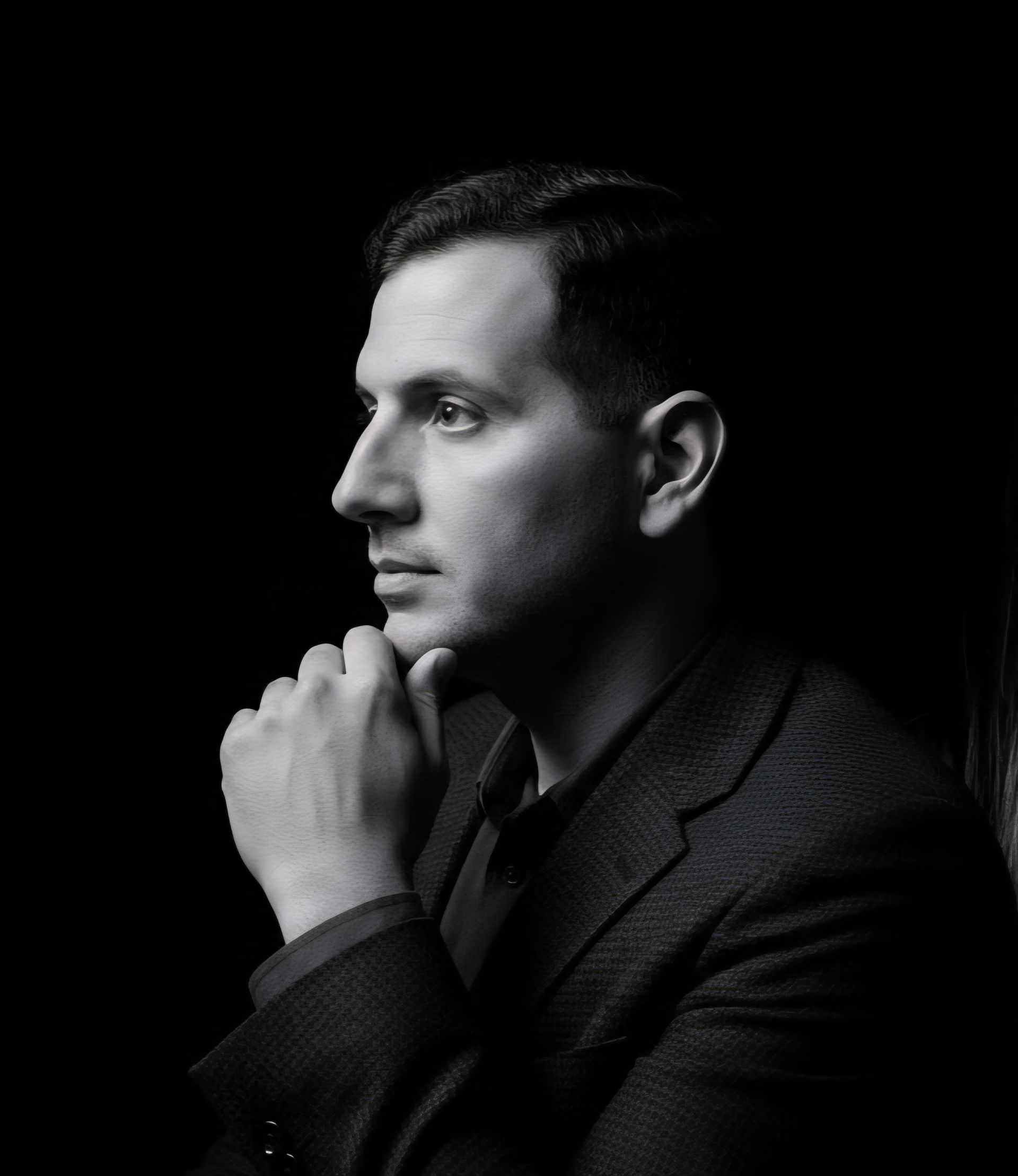
Cost of Knowledge by Nino Mihilli
Nino Mihilli
I've Paid a Lot of Tuition Without Ever Sitting in a Classroom
What Business Mistakes Taught Me About Failure, Experience, Entrepreneurship, and Learning the Expensive Way
I've paid for a lot of business education.
Some of it came from books.
Some from conversations.
Some from people smarter and more experienced than me.
But some of the most expensive lessons I've ever learned didn't come with a textbook.
They came with an invoice.
A bad hire.
A business decision.
An opportunity I misjudged.
Money I shouldn't have spent.
Time I couldn't get back.
I've joked before that business has its own tuition.
The difference is that nobody tells you what the class costs until after you've taken it.
Failure Isn't Automatically a Lesson
We love saying:
"You learn from failure."
I don't think that's automatically true.
Some people make the same mistake for twenty years.
Failure doesn't teach you simply because it happened.
You have to study it.
Why did this happen?
What did I miss?
What did I assume?
Was the strategy wrong?
Was the execution wrong?
Was the timing wrong?
Did I ignore something because I wanted the answer to be different?
What would I do differently now?
Without those questions, failure is just pain.
With them, it can become education.
My Retail Years Were Expensive Schooling
I've written about my years owning Boost Mobile stores and the turnover problems I had.
At the time, it was easy to think:
We need better employees.
Looking backward, I can see the situation differently.
Sometimes I needed to become a better employer.
I was too focused on filling positions.
I didn't always spend enough time understanding whether someone was actually a good match for the environment.
That lesson didn't come from a management book.
I lived it.
And because I lived it, I carried it with me into Flat Staffing.
That's what I mean by tuition.
I paid for the lesson once.
My responsibility is not to keep paying for the same class.
There Is a Difference Between a Mistake and a Pattern
Everybody makes mistakes.
I certainly do.
A mistake doesn't worry me nearly as much as repeating one without understanding why.
If you make the same bad hire repeatedly, something in the hiring process needs attention.
If customers repeatedly misunderstand the same thing, communication may be the problem.
If the same operational issue happens every week, stop treating each occurrence as an isolated emergency.
If you're constantly running out of time, maybe the problem isn't your calendar.
Maybe you've said yes to too much.
Patterns are reality trying to get your attention.
I've become much more interested in finding them.
Ego Makes Lessons More Expensive
One of the fastest ways to waste a failure is to immediately find someone else to blame.
The employee.
Customer.
Vendor.
Economy.
Competitor.
Timing.
Sometimes those things genuinely are responsible.
Business doesn't happen in a vacuum.
But I still try to ask:
What part of this was mine?
That's the part I can change.
If I blame everything outside myself, I may feel better.
But I haven't learned very much.
Taking responsibility doesn't mean accepting blame for things you didn't cause.
It means being willing to examine the things you could have done differently.
That's where growth lives.
I've Learned to Separate the Decision From the Outcome
This took me a while.
A good outcome doesn't always mean you made a good decision.
Sometimes you get lucky.
And a bad outcome doesn't always mean the original decision was foolish.
Sometimes you made the best decision available with the information you had and reality simply went another direction.
That's important.
Otherwise, we teach ourselves the wrong lessons.
Imagine someone makes a reckless decision and it works.
If they conclude:
"That was smart."
they may take an even larger reckless risk next time.
The outcome rewarded bad judgment.
Eventually, reality may collect the bill.
I want to evaluate how the decision was made, not only how it ended.
This Is One Reason Evidence Matters to Me
Over time, I've become increasingly skeptical of stories we tell ourselves after something happens.
Human beings are great at explaining the past.
After something succeeds, everyone can explain why it was obviously going to succeed.
After something fails, everyone can explain why failure was inevitable.
Reality is messier.
That's why I like evidence.
What did we actually know at the time?
What signals were available?
What assumptions did we make?
Which assumptions proved false?
What changed?
The more accurately you reconstruct the decision, the more useful the lesson becomes.
Technology Has Made Failure Cheaper in Some Areas
One of the things I love about building with modern technology and AI is the ability to test certain ideas faster and less expensively.
That's important.
If failure is going to teach you something, you'd rather pay $500 for the lesson than $50,000.
Build a small version.
Test the assumption.
See what happens.
Gather evidence.
Then decide whether the idea deserves more resources.
I don't think every entrepreneur needs to make giant bets to prove they're serious.
Sometimes the smartest entrepreneur designs the experiment so being wrong is cheap.
Then learns quickly.
But Don't Become Afraid of Losing
There's a danger on the other side.
Once you've been burned enough times, you can become too cautious.
You remember the failed investment.
The bad employee.
The business that didn't work.
The money you lost.
So you stop taking chances.
That's not the lesson either.
Experience should improve your judgment.
It shouldn't destroy your courage.
I still want to take risks.
I still want to build things that might fail.
I still want to enter areas where I don't know everything.
I just want to do it more intelligently than I did twenty years ago.
Writing The Variable Gave Me a Different Kind of Failure
Writing is interesting because failure happens privately over and over.
A scene doesn't work.
A chapter isn't strong enough.
Something sounded better in your head.
You delete it.
Rewrite it.
Try again.
Nobody has to know.
That's actually a beautiful way to work.
Failure becomes part of the process rather than a verdict on the person.
Writing The Variable reinforced something business had already taught me:
What doesn't work can still move you toward what does.
But only if you're willing to change it.
Don't Build Your Identity Around Being Right
This may be one of the most important lessons I've learned.
If your identity depends on always being right, you'll eventually start protecting your mistakes.
You'll defend the strategy.
Ignore the evidence.
Dismiss criticism.
Explain away results.
Because changing your mind feels like losing.
I'd rather be wrong for a day than wrong for ten years because I was too proud to admit it.
I'm trying to get better at saying:
"I thought this. The evidence changed. Now I think something different."
That's not weakness.
That's learning.
Some Lessons Can't Be Outsourced
I love learning from other people.
Books can save you years.
Mentors can help you avoid mistakes.
A conversation with someone experienced can completely change your thinking.
But there are some lessons I don't think you fully understand until you're responsible for the outcome.
Reading about payroll isn't the same as making payroll.
Reading about leadership isn't the same as having to make a decision that affects someone's job.
Reading about risk isn't the same as watching your own money disappear.
Reading about entrepreneurship isn't the same as having customers, employees, vendors, taxes, and problems all expecting an answer from you.
Experience adds weight to knowledge.
Faith Changes What Failure Means to Me
My faith has also changed my relationship with failure.
Proverbs 24:16 says:
"For though the righteous fall seven times, they rise again."
The verse doesn't say the righteous never fall.
They do.
What matters is what happens next.
Get up.
Learn.
Keep going.
I don't believe every failure is some hidden blessing.
Some failures simply hurt.
Some are consequences of our own poor decisions.
Some come from circumstances outside our control.
But I do believe God can use difficult seasons to shape us if we're willing to be shaped.
I've seen that in my own life.
I Want My Mistakes to Become Assets
This is how I think about it now.
If a mistake costs me money but teaches me something that prevents a much larger mistake later, the lesson has value.
If a bad hiring experience makes me a better leader, it has value.
If a failed project teaches me how to test the next idea faster, it has value.
If losing forces me to examine my assumptions, it has value.
The original mistake doesn't become good.
But the knowledge that comes from it can become useful.
That's how experience compounds.
The Goal Isn't a Mistake-Free Life
I don't think that's possible.
And I'm not sure it would be desirable.
A life with zero mistakes probably means a life where you didn't try very much.
The goal is different.
Make better mistakes.
Take intelligent risks.
Don't repeat avoidable failures.
Learn faster.
Protect the downside when you can.
Listen when reality contradicts you.
Stay humble enough to change.
And when you do make an expensive mistake, get everything you can from the lesson.
You already paid for it.
Final Thoughts
I've paid plenty of tuition in business.
I expect I'll pay more.
There are things I'm building today that may not work exactly as I imagine.
There are decisions I'll look back on and wish I'd made differently.
That's part of being in the arena.
But I want to make sure every difficult experience leaves something behind.
Better judgment.
Better systems.
Better questions.
More humility.
More patience.
More wisdom.
That's the return I'm looking for.
Success teaches you something.
Failure can teach you something too.
But failure sends you the bill first.
So when it does, don't throw the receipt away.
Study it.
You already paid for the class.
Make sure you learn the lesson.
— Nino Mihilli
Stay Connected with Nino Mihilli
🌐 Personal Website: https://www.ninomihilli.com
🏢 T47 Group: https://www.t47group.com
👷 Flat Staffing: https://www.flatstaffing.com
📖 Read Nino Mihilli's novel, The Variable, on Amazon: https://www.amazon.com/dp/B0GX3783RG
Follow Nino Mihilli on LinkedIn, Instagram, X, Facebook, YouTube, Medium, and Substack for more on entrepreneurship, business, artificial intelligence, leadership, faith, writing, failure, and the lessons I'm still learning while building.