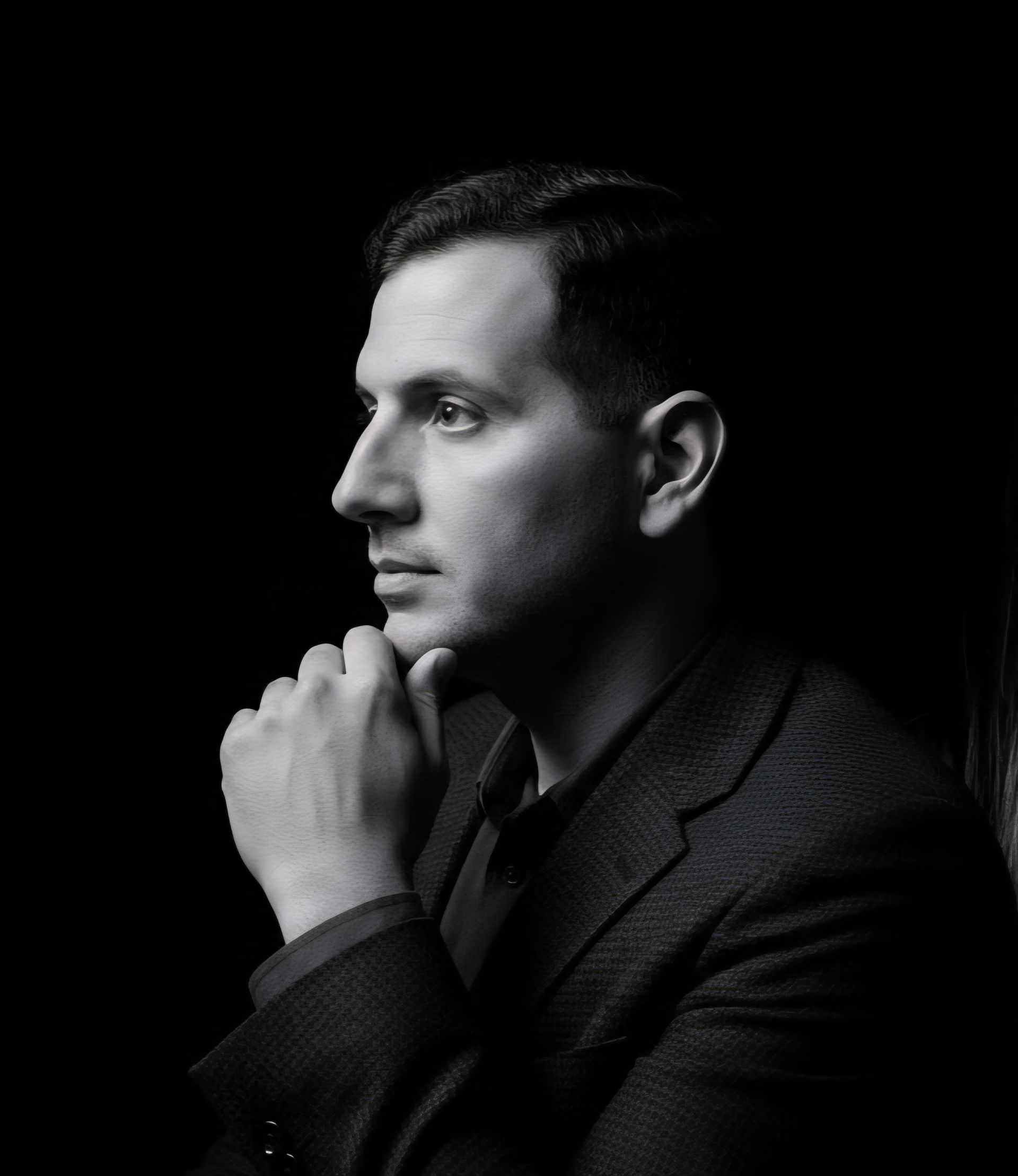
AI to help by Nino Mihilli
Nino Mihilli
I Don't Want AI to Think for Me. I Want It to Help Me Think Better.
A Founder’s Perspective on Artificial Intelligence, Judgment, Curiosity, and Why Better Tools Still Need Better Humans
I use artificial intelligence every day.
I build with it.
Research with it.
Write with it.
Analyze problems with it.
Explore business ideas with it.
Challenge assumptions with it.
And the deeper I get into AI, the more convinced I become of something that might sound strange coming from someone so excited about the technology:
I don't want AI to think for me.
I want it to help me think better.
There's an important difference.
The Wrong Goal Is to Stop Thinking
When calculators became common, we didn't decide numbers no longer mattered.
When GPS arrived, geography didn't disappear.
When search engines gave us access to enormous amounts of information, knowledge didn't become useless.
Tools change what humans need to spend time doing.
AI will do the same thing.
But I think there's a danger in treating artificial intelligence like a machine that exists to give us answers so we no longer have to wrestle with questions.
That's not the future I want.
I want the opposite.
Give me more information.
Show me something I missed.
Challenge my reasoning.
Help me explore another possibility.
Find the contradiction.
Then let me decide what it means.
A Confident Answer Isn't Necessarily a Correct Answer
This is one of the most important lessons I've learned working with AI.
Something can sound intelligent and still be wrong.
Actually, that lesson isn't unique to artificial intelligence.
Humans have been doing that forever.
We confuse confidence with accuracy.
A polished presentation feels more credible.
A confident speaker feels more knowledgeable.
A detailed explanation feels more trustworthy.
But reality doesn't care how confidently something was presented.
It's either supported by evidence or it isn't.
That's becoming increasingly important to me.
I've Become More Interested in Evidence
The more I build technology, the more I find myself asking:
How do we know?
Where did that information come from?
How recent is it?
What contradicts it?
What are we assuming?
What would make us change our mind?
What actually happened?
Those questions aren't glamorous.
But they're valuable.
Especially in a world where generating an answer is becoming incredibly cheap.
If everyone can produce an answer instantly, the competitive advantage may shift toward something else:
Knowing which answers deserve to be trusted.
AI Can Be an Incredible Sparring Partner
One of my favorite ways to use AI isn't simply asking:
"What should I do?"
I like asking it to attack the idea.
What am I missing?
Make the strongest argument against this.
What assumptions am I making?
What would have to be true for this to fail?
What questions haven't I asked?
Now AI becomes something different.
Not an oracle.
A sparring partner.
That's much more useful to me.
I don't need a machine agreeing with everything I say.
I can do that myself.
I want something that helps expose weaknesses before reality does.
Entrepreneurs Are Especially Vulnerable to Confirmation Bias
We fall in love with our ideas.
I've written about this before because I've certainly done it.
You imagine what something could become.
Then you start collecting evidence that supports the vision.
Customer likes it?
See, I knew it.
Someone criticizes it?
They don't understand.
Numbers look good?
Proof.
Numbers look bad?
Too early.
Entrepreneurs can become extremely creative at explaining why we're still right.
AI can make this worse if we use it incorrectly.
Ask leading questions and you may get answers that reinforce what you already believe.
That's not intelligence.
That's a very sophisticated echo chamber.
Ask AI to Disagree With You
This is a habit I think more people should develop.
If you're considering a business decision, don't only ask AI why it could work.
Ask why it could fail.
If you're researching an investment, don't only explore the bull case.
Build the bear case.
If you're evaluating a strategy, ask what evidence would invalidate it.
If you're convinced someone is wrong, ask for the strongest version of their argument.
You may still reach exactly the same conclusion.
That's fine.
But now your conclusion has survived a fight.
I trust that more.
Building AI Has Changed How I Think About Questions
Before spending so much time around artificial intelligence, I probably underestimated the value of a well-formed question.
Now I think questions may become more important than ever.
Consider the difference between:
"Is this a good business idea?"
and:
"What assumptions must be true for this business to become profitable, and which of those assumptions can I test cheaply before investing heavily?"
Same technology.
Very different question.
Likely a very different answer.
The quality of the tool matters.
But the quality of the person using the tool matters too.
AI Should Increase Curiosity
I don't want artificial intelligence making me intellectually lazy.
I want it making me more curious.
If I encounter something I don't understand, I can explore it immediately.
Economics.
Technology.
Science.
History.
Markets.
Business models.
A legal concept.
An unfamiliar industry.
A piece of software.
I can go from:
"I don't know anything about this."
to:
"I understand enough to start asking intelligent questions."
much faster than I could before.
That's incredible.
But the important phrase is:
start asking intelligent questions.
Not suddenly become an expert.
Those aren't the same thing.
Expertise Still Matters
I think this gets lost in some conversations about AI.
Access to information isn't the same as experience.
I can learn about medicine.
That doesn't make me a doctor.
I can explore law.
That doesn't make me an attorney.
I can study engineering.
That doesn't mean you should let me design a bridge.
AI can dramatically accelerate learning.
But expertise includes context, judgment, pattern recognition, and experience earned through doing the work.
I respect that.
The best use of AI isn't pretending expertise no longer matters.
It's helping people collaborate with expertise more effectively.
Experience Gives Questions Context
This is where my years in business still matter.
AI can tell me a lot about staffing.
But I've lived staffing.
I've dealt with call-offs.
Payroll.
Clients.
Recruiting.
Workers.
Invoices.
Last-minute changes.
That experience changes the questions I ask.
The same is true for retail.
Leadership.
Writing.
Building companies.
Experience gives you context that a generic question doesn't contain.
That's why I think the combination becomes powerful:
Human experience + machine capability.
Not one replacing the other.
I Don't Want AI Making My Values Either
There's another boundary that's important to me.
AI can help evaluate options.
It can explain consequences.
It can identify tradeoffs.
But it shouldn't determine what I value.
That's my responsibility.
What kind of company do I want to build?
How should employees be treated?
What am I unwilling to do for money?
What matters more than growth?
What do I believe is right?
Technology can inform those decisions.
It cannot own them.
Faith Gives Me an Anchor Technology Can't
My Christian faith shapes how I think about knowledge and wisdom.
Those words are related, but they aren't identical.
You can possess enormous amounts of information and still make terrible decisions.
Proverbs 4:7 says:
"The beginning of wisdom is this: Get wisdom. Though it cost all you have, get understanding."
That distinction matters to me.
AI may give humanity access to more information than any generation in history.
But information isn't automatically wisdom.
Wisdom still requires judgment.
Humility.
Discernment.
Character.
And, for me, faith.
Sometimes the Best AI Answer Should Be "I Don't Know"
I've actually become more impressed by systems that can recognize uncertainty.
Because uncertainty is real.
Business is uncertain.
Markets are uncertain.
People are uncertain.
The future is uncertain.
I'd rather have an honest:
"We don't have enough evidence."
than a beautifully written answer pretending certainty exists.
That's true whether the answer comes from a machine or a human being.
Knowing the limits of what you know is a form of intelligence.
AI Won't Remove Human Responsibility
This is another principle I believe strongly.
If I use AI to help make a business decision, I'm still responsible for the decision.
If the AI is wrong, I can't shrug and say:
"The computer told me to do it."
That's not leadership.
Tools assist.
Humans remain accountable.
As AI becomes more capable, I think this distinction becomes even more important.
Greater capability should create greater responsibility, not less.
What I Want AI to Give Us Back
Ultimately, I don't want artificial intelligence merely helping us produce more stuff.
More emails.
More reports.
More content.
More meetings summarized into more documents nobody reads.
That's not very exciting.
I want AI to give us something more valuable.
Time to think.
Time to talk with people.
Time to solve harder problems.
Time to be creative.
Time to investigate.
Time to notice things.
Time to ask better questions.
Time to be human.
If AI gives us that, we've built something meaningful.
I'm Still Learning
The technology is moving quickly.
Anyone pretending to know exactly where all of this ends is more confident than I am.
I'm learning every day.
Building.
Testing.
Changing my mind.
Discovering limitations.
Discovering capabilities I hadn't imagined.
That's part of what makes this period so fascinating.
We aren't simply watching a new piece of software arrive.
We're learning a new way of working with information.
I think that will change business enormously.
But I don't think the winners will simply be the people who use the most AI.
I think they'll be the people who learn how to use it with the best judgment.
Final Thoughts
I don't want artificial intelligence replacing my curiosity.
I want it multiplying it.
I don't want AI telling me what to believe.
I want it showing me what I haven't considered.
I don't want it protecting my ideas.
I want it attacking them.
I don't want it removing responsibility from my decisions.
I want it helping me make those decisions with better information.
And I definitely don't want it doing all my thinking.
Thinking is part of being human.
So is questioning.
So is doubting.
So is changing your mind when the evidence changes.
So is wisdom.
The machines are going to get better.
Much better.
I think humans need to get better too.
Better at asking.
Better at verifying.
Better at listening.
Better at admitting uncertainty.
Better at distinguishing information from wisdom.
AI can help us do all of that.
But only if we remember what the tool is for.
Don't use artificial intelligence so you can stop thinking.
Use it so you can think farther than you could before.
That's the future I'm interested in building.
— Nino Mihilli
Stay Connected with Nino Mihilli
🌐 Personal Website: https://www.ninomihilli.com
🏢 T47 Group: https://www.t47group.com
👷 Flat Staffing: https://www.flatstaffing.com
📖 Read Nino Mihilli's novel, The Variable, on Amazon: https://www.amazon.com/dp/B0GX3783RG
Follow Nino Mihilli on LinkedIn, Instagram, X, Facebook, YouTube, Medium, and Substack for more on entrepreneurship, artificial intelligence, technology, leadership, faith, writing, and what I'm learning while building.