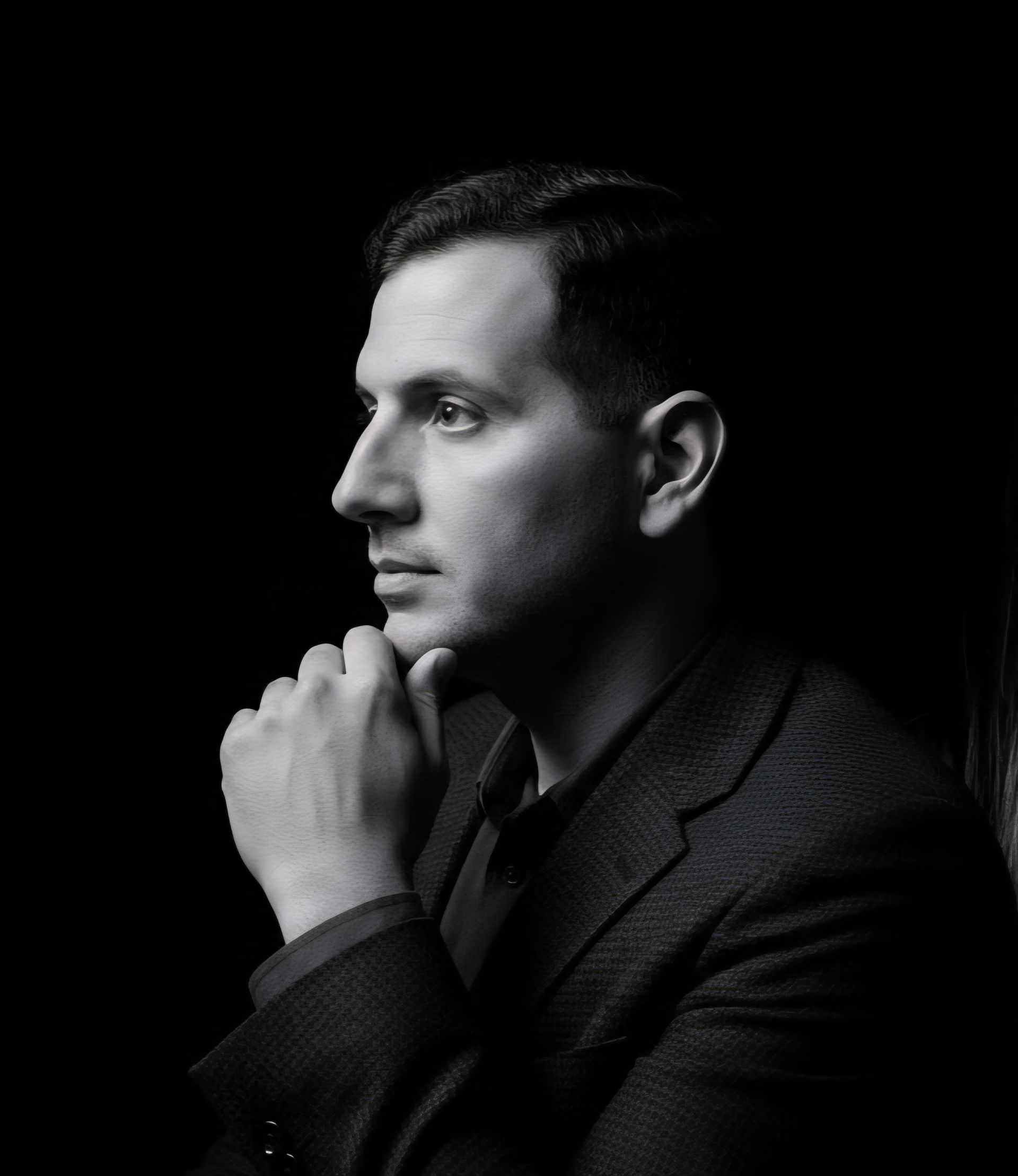
Ownership by Nino Mihilli
Nino Mihilli
I've Learned That Ownership Changes How You See the World
The Difference Between Having an Opinion About a Problem and Being Responsible for Solving It
It's easy to have an opinion about how something should be done.
I've had plenty.
You walk into a business and wonder why the service is so slow.
You use software and can't understand why something simple requires six steps.
You see a company making decisions that don't seem to make sense.
You look at a problem and think:
I could do that better.
Sometimes you're right.
Sometimes you're missing information.
I've been on both sides.
And one of the biggest lessons entrepreneurship has taught me is that there's an enormous difference between recognizing a problem and accepting responsibility for solving it.
Ownership changes your perspective.
Everyone Has Ideas Until They're Responsible for the Outcome
It's easy to stand outside a business and explain what management should do.
Hire more people.
Pay more.
Lower prices.
Improve service.
Invest in technology.
Spend more on marketing.
Move faster.
Make better decisions.
Some of those suggestions may be excellent.
But once you're responsible for the business, every decision has consequences.
Hiring more people increases payroll.
Lowering prices affects margins.
Investing in technology requires capital.
Moving faster can increase mistakes.
Changing a process may disrupt something that was working.
Suddenly you're not evaluating one decision in isolation.
You're evaluating the entire system.
That's when things get interesting.
The Owner Has to Live With the Consequences
I've learned that advice feels different when you're the person who has to implement it.
Someone can recommend an expensive solution.
If it doesn't work, they move on.
The owner still has the invoice.
Someone can suggest taking a risk.
If it fails, they may say the market changed.
The owner still has employees depending on the business.
That doesn't mean outside advice is worthless.
Quite the opposite.
I value people who challenge my thinking.
But I've become more interested in understanding who carries the consequences of a decision.
Because responsibility changes how people evaluate risk.
Running Flat Staffing Has Reinforced This
Staffing is a business where decisions affect real people.
A customer needs workers.
Employees need assignments.
Hours need to be tracked.
Payroll needs to be accurate.
Invoices need to be correct.
Communication matters.
A mistake isn't always just a number on a report.
It may mean an employee receives the wrong paycheck.
A customer doesn't get the workers they expected.
A schedule falls apart.
Someone has to spend hours correcting something that should have been handled properly the first time.
When you're responsible for the outcome, details stop looking small.
They become important.
Complaining Is Easy. Building a Solution Is Different.
I've complained about plenty of things.
Software that doesn't work.
Processes that waste time.
Companies that make simple tasks unnecessarily difficult.
Services that don't deliver what they promise.
But somewhere along the way, I started asking a different question:
What would it actually take to fix this?
That question is more demanding.
It requires understanding the problem.
The people involved.
The constraints.
The economics.
The technology.
The unintended consequences.
Sometimes the solution is easier than expected.
Sometimes you discover why nobody fixed it yet.
Either way, you learn something.
Technology Has Made Me More Humble
One of the things I enjoy about building software is that ideas become testable.
You can imagine an incredible application.
Describe all the features.
Explain how it should work.
Then you start building.
Suddenly there are questions you hadn't considered.
What happens when information is missing?
What happens when two people make changes simultaneously?
What happens when the connection fails?
What happens when the user makes a mistake?
What happens when the system produces the wrong answer?
Who is responsible for correcting it?
How do you protect sensitive information?
How do you know the system is actually working?
The original idea may have sounded simple.
Making it reliable is another matter.
That's where respect for the work grows.
AI Makes Building Easier, but Responsibility Doesn't Disappear
Artificial intelligence has dramatically expanded what people can attempt.
Someone without a traditional programming background can explore ideas that once required a much larger technical team.
I find that exciting.
But AI doesn't eliminate responsibility.
If the software makes a mistake, the customer doesn't care which tool helped create it.
If the numbers are wrong, the numbers are wrong.
If a system exposes information it shouldn't, that's a serious problem.
If an automation creates more work than it saves, the technology hasn't delivered its promise.
The ability to create something isn't the same as the ability to operate it responsibly.
That's a distinction I think more people will appreciate as AI becomes part of everyday business.
Ownership Forces You to Think Beyond Yourself
When you're responsible only for your own work, your decisions have a certain scope.
As your responsibilities grow, so do the consequences.
An employee makes a decision that affects a task.
A manager makes decisions that affect a team.
A business owner makes decisions that may affect dozens or hundreds of people.
That changes the questions you ask.
Not simply:
Will this benefit me?
But:
Will this benefit the organization?
Can we afford it?
What happens to employees?
What happens to customers?
What are the risks?
Is this sustainable?
Are we creating a problem someone else will have to clean up?
Responsibility broadens your perspective.
At least it should.
Good Intentions Don't Guarantee Good Outcomes
This is a lesson I keep learning.
You can make a decision with excellent intentions and still produce a poor result.
You hire someone because you want to give them an opportunity.
The role isn't right for them.
You invest in technology because you want to improve efficiency.
The implementation creates confusion.
You offer a customer special terms because you want to help.
The arrangement becomes financially unsustainable.
You try to protect an employee from a difficult conversation.
The problem grows worse.
Intentions matter.
But outcomes matter too.
Ownership requires looking at both.
Sometimes the Kindest Decision Is the Hardest One
Leadership isn't always about making people happy.
Sometimes you have to say no.
To a customer.
An employee.
A business partner.
An opportunity.
Even yourself.
I've learned that avoiding a difficult decision doesn't eliminate its consequences.
It often transfers those consequences to someone else.
A problem you refuse to address may become another employee's burden.
A customer you refuse to confront may create problems for the entire team.
An expense you refuse to eliminate may threaten the company's financial health.
Kindness and accountability aren't opposites.
Sometimes accountability is how you protect people.
Ownership Has Taught Me to Respect Other Business Owners
I may disagree with how another company operates.
That doesn't mean every decision they make is foolish.
Sometimes there are constraints I can't see.
Costs I don't know about.
Contracts I haven't read.
Regulations I'm unfamiliar with.
History that explains a decision.
I still believe businesses should be challenged.
Bad practices should be questioned.
Customers deserve better when companies fail them.
But I've become slower to assume that every problem has an obvious solution.
Experience teaches humility.
The Same Principle Applies to Employees
Ownership isn't limited to people who own companies.
I've worked with people who take extraordinary ownership of their responsibilities.
They see something wrong and address it.
They follow through.
They communicate.
They don't hide mistakes.
They care about the outcome, not simply completing the task.
Those people are valuable.
And I've learned that leaders need to give them the authority, information, and support required to succeed.
You can't demand ownership while denying people the ability to make decisions.
Responsibility and authority need to work together.
There's a Difference Between Blame and Ownership
This is important.
Ownership doesn't mean accepting blame for everything that happens.
Some things are outside our control.
The economy changes.
Customers make unexpected decisions.
People get sick.
Technology fails.
Weather disrupts plans.
Bad things happen.
But even when something isn't your fault, you may still have responsibility for your response.
That's where ownership becomes useful.
Instead of spending all your energy asking who caused the problem, you can also ask:
What can I do about it now?
Sometimes that's the most productive question available.
Ownership Changes How You Handle Mistakes
I've made mistakes in business.
I'm sure I'll make more.
That's part of operating in an uncertain world.
The important thing is what happens afterward.
Do I acknowledge it?
Do I understand why it happened?
Do I correct what I can?
Do I communicate with the people affected?
Do I change something so the mistake becomes less likely to happen again?
Or do I spend my time explaining why it wasn't really my fault?
I've found that defending mistakes can become more expensive than correcting them.
Writing a Book Is Another Form of Ownership
When I wrote The Variable, I learned a different version of this lesson.
An idea in your head is protected from criticism.
Nobody can point out the weak chapter.
The confusing character.
The scene that doesn't work.
The sentence that needs rewriting.
But once you put the idea on paper, it becomes real.
Now you're responsible for what you created.
You can revise it.
Improve it.
Remove things.
Make difficult choices.
Eventually you have to stand behind the finished work.
That process has a lot in common with entrepreneurship.
Both require moving from imagination to accountability.
Ownership Changes How You See Your Community
Living and building businesses in Phoenix has given me another perspective.
It's easy to complain about problems in a city.
Traffic.
Development.
Employment.
Housing.
Business conditions.
Education.
Public services.
Some criticisms are justified.
But I also think about the people trying to build solutions.
The small-business owner creating jobs.
The teacher investing in students.
The nonprofit helping families.
The entrepreneur creating a service.
The employee showing up every day.
The person volunteering time.
Communities don't improve only because people identify what's wrong.
They improve when people participate in making something better.
You Don't Have to Solve Every Problem
There's a danger in taking this philosophy too far.
Not every problem belongs to me.
I can't fix everything.
Neither can you.
There are limits to our time, money, energy, knowledge, and influence.
Ownership doesn't mean carrying the entire world on your shoulders.
Sometimes wisdom means recognizing what is yours to address and what isn't.
That's especially important for entrepreneurs.
We see problems everywhere.
That doesn't mean we need to create a company for each one.
Choose where you can genuinely contribute.
Then take that responsibility seriously.
Faith Has Changed My Understanding of Ownership
There's an interesting tension in my faith.
I'm responsible for how I use what I've been given.
But I don't ultimately own everything I manage.
My time.
Resources.
Opportunities.
Abilities.
Relationships.
Even the businesses I've built.
I see those things increasingly through the lens of stewardship.
Luke 12:48 says:
"From everyone who has been given much, much will be demanded."
That verse reminds me that responsibility grows with opportunity.
More resources don't simply mean more freedom.
They also mean more accountability.
What am I doing with what I've been given?
Am I using it well?
Am I helping people?
Am I building responsibly?
Am I treating others fairly?
Those questions matter more to me than titles.
I Want My Children to Understand This Difference
As a father, I want my children to become capable of taking ownership of their lives.
Not because everything will be under their control.
It won't.
But because blaming circumstances for every disappointment leaves you powerless.
Sometimes life is unfair.
Sometimes people disappoint you.
Sometimes opportunities disappear.
Sometimes you do everything right and still lose.
I want them to understand that.
But I also want them to ask:
What can I learn?
What can I change?
What can I build?
What responsibility is mine?
What should I do next?
Those questions create movement.
The World Looks Different When You Stop Being Only a Critic
I've noticed something about people who build things.
They tend to develop a different appreciation for effort.
Once you've tried to create a company, you understand how difficult it can be to keep one operating.
Once you've tried to build software, you appreciate reliable technology.
Once you've written something substantial, you appreciate good writing.
Once you've managed people, you understand that leadership involves more than giving instructions.
Once you've been responsible for payroll, you understand that revenue and cash flow aren't the same thing.
Experience doesn't automatically make someone wise.
But responsibility gives you opportunities to become wiser.
Final Thoughts
I still have opinions.
Plenty of them.
I still look at businesses and think something could be better.
I still get frustrated with inefficient systems.
I still see opportunities everywhere.
And I still believe people should question the way things have always been done.
But entrepreneurship has changed how I respond.
I'm less interested in simply pointing at a problem.
I'm more interested in understanding what it would take to solve it.
Because building forces you to confront reality.
Costs.
Constraints.
People.
Risk.
Uncertainty.
Consequences.
And responsibility.
It's easy to imagine the perfect business when you're not the one operating it.
It's easy to recommend a decision when you don't have to live with the outcome.
It's easy to criticize something you've never attempted to build.
That doesn't mean criticism is always wrong.
It means creation deserves respect.
And responsibility deserves serious consideration.
Having an opinion about a problem is easy.
Accepting responsibility for solving it changes you.
That's one of the most valuable lessons business ownership has given me.
And it's a lesson I'm still learning.
— Nino Mihilli
Stay Connected with Nino Mihilli
Personal Website: https://www.ninomihilli.com
T47 Group: https://www.t47group.com
Flat Staffing: https://www.flatstaffing.com
Read The Variable on Amazon: https://www.amazon.com/dp/B0GX3783RG
Follow Nino Mihilli on LinkedIn, Instagram, X, Facebook, YouTube, Medium, and Substack for more on entrepreneurship, leadership, faith, technology, family, and the lessons I'm learning while building.