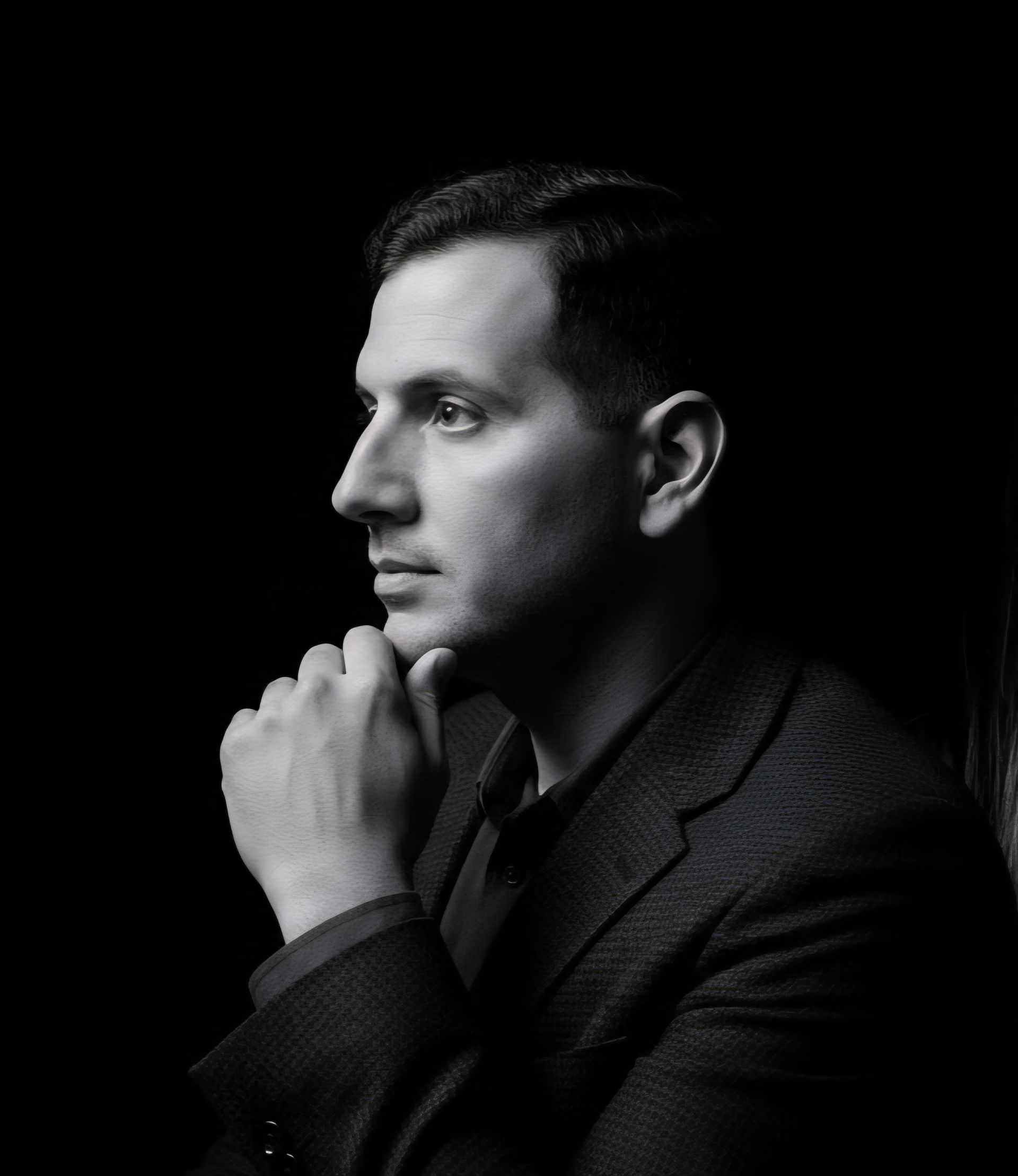
Cheap vs Disciplined by Nino Mihilli
Nino Mihilli
There's a Difference Between Being Cheap and Being Disciplined
One of the Hardest Lessons in Business Is Knowing Where to Save—and Where Saving Actually Costs You More
I've always paid attention to what things cost.
I think most business owners do.
When it's your money leaving the account, numbers look different.
A hundred dollars here.
Five hundred there.
Another monthly subscription.
Another employee.
Another piece of equipment.
Another service.
It adds up quickly.
So I've never believed that spending more automatically means getting more.
But I've also learned the opposite lesson:
The cheapest decision can become the most expensive decision in the room.
There's a difference between being cheap and being disciplined.
It took me some time to understand that difference.
Cheap Looks at the Price
Disciplined looks at the value.
Those can produce completely different decisions.
Imagine two pieces of equipment.
One costs $500.
The other costs $1,000.
The $500 option looks cheaper.
But what if it breaks twice as often?
What if employees hate using it?
What if it slows down the work?
What if you're replacing it next year?
Suddenly, you didn't save $500.
You spent $500 to create another problem.
Price is obvious.
Cost is sometimes hidden.
Small Businesses Have to Watch Every Dollar
This isn't an argument for spending freely.
Especially in small business.
Cash matters.
Cash flow matters.
Timing matters.
A company can be profitable on paper and still have a cash problem.
I've spent enough years in business to respect that.
At Flat Staffing, for example, payroll doesn't wait for a customer to decide when they feel like paying an invoice.
Employees worked.
They expect to be paid.
That's real responsibility.
So when I look at expenses, I'm not casual about them.
Every recurring expense eventually becomes part of the weight the business has to carry.
The discipline is figuring out which weight makes the company stronger.
Recurring Expenses Deserve Extra Attention
A one-time $1,000 purchase is $1,000.
A $1,000 monthly expense is $12,000 every year.
That's different.
Software has made this especially easy to ignore.
$29 a month.
$49 a month.
$99 a month.
$299 a month.
Individually, none of them looks frightening.
Then one day you look at the credit card and realize you're paying for a small army of software subscriptions.
Somebody signed up for a trial.
Another tool was supposed to replace an old tool, but nobody canceled the old one.
A service is still billing even though nobody remembers the password.
This is why financial discipline often isn't about making dramatic cuts.
It's asking simple questions repeatedly.
Do we still use this?
Does it still create value?
Don't Cut the Thing Making You Money
This sounds obvious.
Businesses still do it.
Revenue slows down, so the immediate reaction is:
Cut expenses.
Sometimes that's necessary.
But all expenses aren't equal.
If you cut something that costs $1,000 but reliably helps produce $5,000, you didn't improve the business by $1,000.
You may have damaged it by $4,000.
The same can happen with people.
Cut hours.
Reduce service.
Stop marketing.
Buy cheaper materials.
Remove support.
The expense goes down immediately.
The damage may take months to become visible.
That's why cost cutting without understanding cause and effect can be dangerous.
People Are Not Just a Payroll Number
Labor is often one of the biggest expenses in a business.
That makes it an obvious place to look when costs need to be controlled.
And yes, businesses have to control labor costs.
You can't sustainably pay for work the company doesn't need.
But there's another side.
A good employee isn't interchangeable with a line on a spreadsheet.
They may know the customers.
The systems.
The history.
The shortcuts.
The problems.
They may prevent mistakes you don't even know they're preventing.
They may be the reason a customer stays.
Replace that person with someone cheaper and you might discover what you were actually paying for.
Sometimes you only recognize value after it's gone.
On the Other Hand, More Expensive Doesn't Mean Better
This matters just as much.
I don't believe in paying a premium simply because something has a famous name attached to it.
Big company.
Fancy office.
Beautiful branding.
High price.
None of that automatically creates value.
I've seen inexpensive tools do incredible work.
I've seen small companies outperform larger ones.
I've seen technology eliminate the need for expensive processes.
I've seen simple solutions beat complicated ones.
That's why I don't like the phrase:
"You get what you pay for."
Sometimes you do.
Sometimes you don't.
I prefer:
Understand what you're paying for.
Technology Has Changed the Equation
This is one of the most exciting things happening in business.
Technology, and especially AI, is changing what small companies can afford to do.
Tasks that once required hours of manual work can increasingly be automated or assisted.
At Flat Staffing, we've spent years learning where time disappears.
Payroll.
Tracking hours.
Invoicing.
Checking information.
Moving data.
Catching mistakes.
Individually, each task may seem manageable.
Multiply it across more than a hundred people and suddenly small inefficiencies become expensive.
We've worked on systems that have taken processes that once consumed hours and reduced parts of them to minutes.
That's not about replacing people for the sake of replacing people.
It's about asking:
Why are we paying talented people to repeatedly do work a machine can help handle faster and with fewer errors?
Then let the people focus on the work that actually requires people.
The Right Tool Can Be Expensive and Still Be Cheap
Suppose software costs $500 a month.
Sounds expensive.
Now suppose it saves forty hours of work every month.
Reduces billing mistakes.
Catches missed invoices.
Improves reporting.
And gives management better information.
Is it expensive?
Maybe.
Is it costly?
Those aren't necessarily the same question.
This is why I try to evaluate purchases by what they change, not simply what they cost.
My Favorite Question Is: Compared to What?
Someone says:
"That's expensive."
Compared to what?
Doing it manually?
Hiring another person?
Making mistakes?
Losing customers?
Downtime?
Replacing it twice?
Not doing it at all?
Every financial decision has an alternative.
Sometimes the alternative is invisible because it's what you're already doing.
But the status quo has a cost too.
Cheap Decisions Often Transfer the Cost Somewhere Else
This is one of the patterns I've noticed.
You save money in one place.
The cost reappears somewhere else.
Buy unreliable equipment.
Pay in downtime.
Use bad software.
Pay in employee frustration.
Understaff.
Pay in service problems.
Hire purely on the lowest wage.
Pay in turnover.
Skip maintenance.
Pay for repairs.
Avoid professional advice when you actually need it.
Pay for mistakes.
The cost didn't disappear.
It moved.
Sometimes financial discipline means tracing where the cost actually went.
I Don't Want to Pay for Ego
There's another category of spending I've become more cautious about.
Expenses that exist primarily to look successful.
The impressive office you don't need.
The vehicle purchased for someone else's opinion.
The expensive service because successful companies are supposedly "supposed" to use it.
The upgrade that changes nothing meaningful.
I'm not against nice things.
I like nice things.
But I want to know why I'm buying them.
There's a difference between enjoying something because you genuinely value it and purchasing something because you need strangers to think you're doing well.
The second category can get very expensive.
Spend Where Customers Can Feel It
One principle I like is putting resources where they improve the actual experience.
Faster service.
Better communication.
Reliable people.
Better systems.
Cleaner facilities.
Safer equipment.
Accurate billing.
Training.
Technology that makes it easier to work with you.
Customers may never know what software you're using.
They don't care.
They care that their invoice is correct.
Their call gets answered.
The worker arrives.
The problem gets handled.
The product works.
That's where investment starts becoming tangible.
Sometimes the Expensive Choice Is Time
Entrepreneurs often calculate money while forgetting to calculate themselves.
We spend three hours trying to save $75.
I've done versions of that.
At some point you have to ask:
What is my time worth here?
That doesn't mean every small task is beneath the owner.
I've done plenty of small tasks and still do.
Sometimes that's how you understand the business.
But if I'm repeatedly spending valuable hours doing something that could be handled properly for far less than the value of my time, that's not necessarily frugal.
It may be poor allocation.
Know What You Should Never Be Cheap About
Every business is different.
But there are areas where cutting corners can become dangerous.
Safety.
Legal compliance.
Security.
Accurate financial records.
Paying people correctly.
Protecting customer information.
Insurance appropriate to the business.
The things that can destroy years of work if handled carelessly.
Nobody enjoys spending money on something they hope they'll never need.
Until they need it.
Then the perspective changes quickly.
Being Disciplined Means Saying No
Financial discipline isn't only about analyzing purchases.
Sometimes it's simply:
No.
No, we don't need another subscription.
No, we don't need to upgrade yet.
No, that project isn't ready for more money.
No, the numbers don't justify it.
No, we're not buying something just because it's on sale.
That's important.
A discount on something you don't need isn't savings.
You still spent money.
Being Disciplined Also Means Saying Yes
This is the part people sometimes miss.
There are times when financial discipline means spending.
Hire the right person.
Replace the unreliable equipment.
Upgrade the system.
Pay for training.
Fix the problem properly.
Invest in something that saves time.
Spend money to reduce a larger risk.
Buy quality once instead of junk three times.
The ability to say no protects capital.
The ability to say yes at the right moment puts capital to work.
You need both.
Faith Changed How I Think About Money Too
Luke 14:28 asks:
"Suppose one of you wants to build a tower. Won't you first sit down and estimate the cost...?"
I like the practicality of that verse.
Before building, count the cost.
Not because building is wrong.
Because stewardship requires understanding what you're committing to.
That's how I increasingly think about business resources.
Money isn't something to worship.
It isn't something to waste either.
It's a resource we've been entrusted with.
Use it intentionally.
Final Thoughts
I've made cheap decisions.
I've made expensive decisions.
I've made purchases that saved far more than they cost.
I've also paid for things that sounded great and accomplished almost nothing.
That's business.
You learn.
But the distinction I try to remember now is simple:
Cheap asks, "How little can I spend?"
Wasteful asks, "Why worry about what it costs?"
Disciplined asks, "What creates the most value from the resources we have?"
Sometimes the answer is the cheapest option.
Sometimes it's the most expensive.
Sometimes it's doing nothing.
Sometimes it's building something yourself.
Sometimes it's paying an expert.
Sometimes it's hiring.
Sometimes it's automating.
The number on the price tag is only the beginning of the decision.
Look at the time.
The risk.
The reliability.
The opportunity cost.
The effect on employees.
The effect on customers.
The effect on the future.
Then spend where it matters.
Save where it doesn't.
And never confuse refusing to spend money with being good at business.
Financial discipline isn't about keeping every dollar.
It's about making sure the dollars you release are working harder than the ones you keep.
— Nino Mihilli
Stay Connected with Nino Mihilli
🌐 Personal Website: https://www.ninomihilli.com
🏢 T47 Group: https://www.t47group.com
👷 Flat Staffing: https://www.flatstaffing.com
📖 Read Nino Mihilli's novel, The Variable, on Amazon: https://www.amazon.com/dp/B0GX3783RG
Follow Nino Mihilli on
LinkedIn, Instagram, X, Facebook, YouTube, Medium, and Substack
for more on entrepreneurship, leadership, technology, artificial intelligence, faith, writing, and what I'm learning while continuing to build.