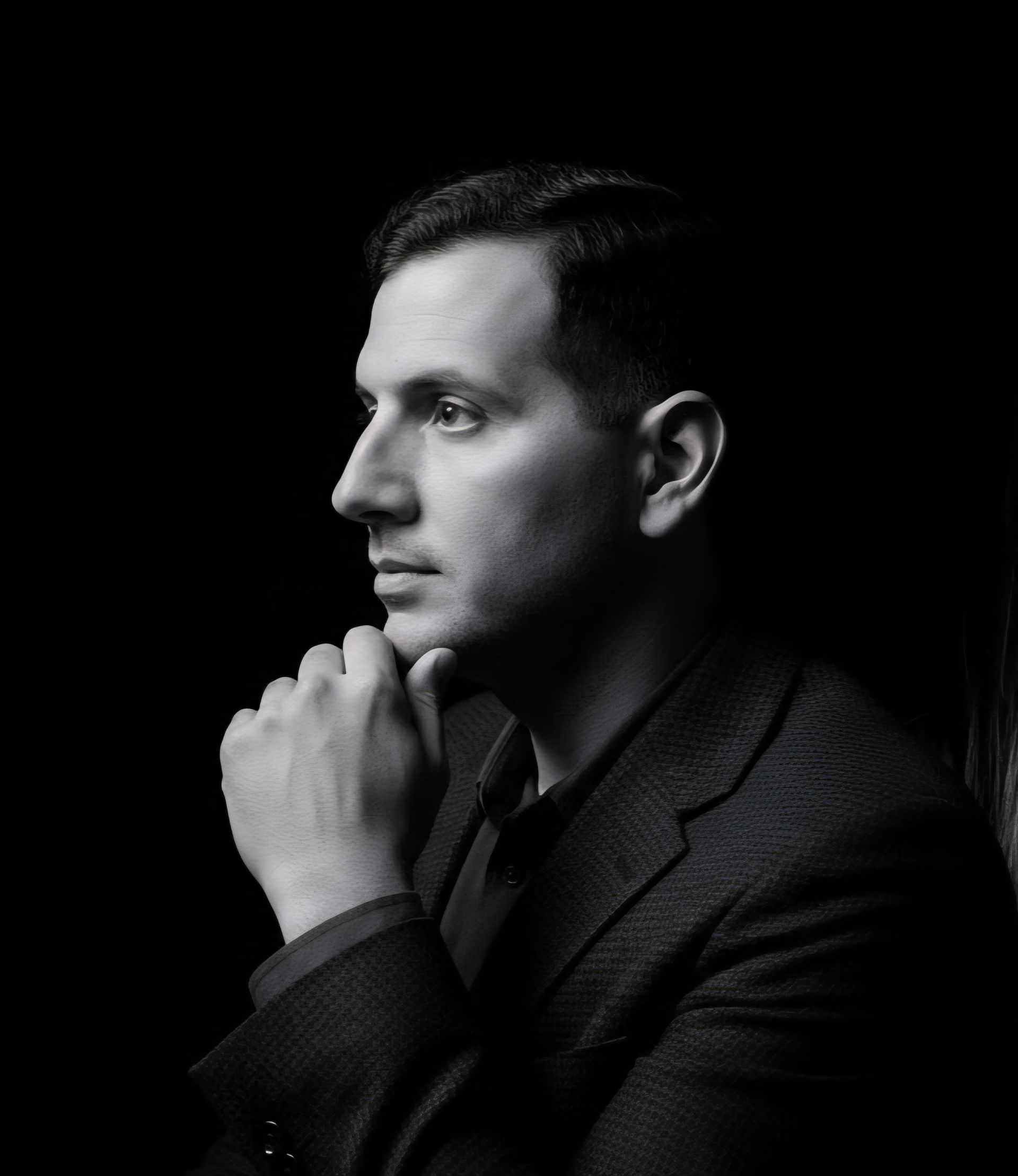
What My Children Learn From Watching Me Work by Nino Mihilli
Nino Mihilli
What I Hope My Children Learn From Watching Me Work
The Most Important Things I Leave My Children Probably Won't Be Businesses, Money, or Anything With My Name on It
My children have watched me work for most of their lives.
They've seen businesses.
Phone calls.
Meetings.
Problems.
Ideas.
Good days.
Long days.
Projects that worked.
Projects that didn't.
They've watched me become interested in something new and disappear down the rabbit hole trying to understand it.
They've seen businesses change.
Technology change.
And me change with it.
Like most parents, I've tried to teach my children things.
But the older I get, the more I realize something:
What they watch me do probably teaches them more than what I tell them to do.
That makes me think differently about work.
Because I'm not only building businesses in front of them.
I'm demonstrating what I believe a life should look like.
And I don't always get that right.
I Want Them to See That Work Matters
I believe in work.
Not because I think life should revolve around work.
It shouldn't.
But there is dignity in becoming useful.
Learning something.
Solving a problem.
Creating value.
Helping someone.
Building something that didn't exist before.
Providing for yourself and the people who depend on you.
I want my children to understand that nobody owes us the life we want.
You participate in building it.
You learn.
You work.
You adapt.
You take responsibility.
That doesn't guarantee everything will go your way.
Life isn't that simple.
But effort gives opportunity somewhere to land.
I Want Them to See Me Be a Beginner
This may be one of the most important lessons I can demonstrate.
I've entered new industries.
Learned new technology.
Explored AI.
Studied investing.
Built businesses.
Written a novel.
And there have been plenty of moments when I didn't know what I was doing yet.
I want my children to see that.
Adults sometimes accidentally teach children that competence is something you're supposed to already possess.
It isn't.
Competence is usually what happens after you've been bad at something long enough to become better.
There's no embarrassment in saying:
"I don't know how to do this yet."
The important word is yet.
I Want Them to Stay Curious
Curiosity has probably done more for me than almost any formal skill.
I've never been satisfied knowing only enough to get by.
I want to understand how things work.
Why businesses succeed.
Why people behave the way they do.
How technology changes industries.
How markets work.
How systems connect.
What's coming next.
One question creates another.
Then another.
That curiosity has taken me into areas I never expected.
I hope my children never lose theirs.
You don't need to become an expert in everything.
You should remain interested in the world.
I Want Them to See That Failure Doesn't Get the Final Word
I've made mistakes.
Business mistakes.
Hiring mistakes.
Financial mistakes.
Judgment mistakes.
Things I've built haven't always worked.
Decisions haven't always produced the result I expected.
I don't want to hide all of that from my children.
Because I don't want them growing up believing successful adults move from victory to victory.
That's fiction.
Sometimes you make a bad decision.
Sometimes circumstances change.
Sometimes you lose.
Sometimes something you believed in simply doesn't work.
Then you decide what happens next.
Learn.
Adjust.
Apologize if necessary.
Start again.
Failure can be an event without becoming an identity.
I Want Them to See Me Change My Mind
This one matters to me.
I don't want my children to believe strength means never admitting you're wrong.
That's insecurity pretending to be confidence.
If new information proves me wrong, I want to change.
If I hurt someone, I want to apologize.
If a better idea appears, I want to recognize it.
If something I believed ten years ago no longer survives the evidence in front of me, I don't need to defend my old opinion simply because it was mine.
There's no prize for remaining consistently wrong.
I Want Them to Understand Money Without Worshipping It
Money matters.
I've never believed pretending otherwise helps anyone.
Money creates choices.
Security.
Education.
Experiences.
Capital.
The ability to help others.
Protection when life goes wrong.
I want my children to understand money.
How to earn it.
Save it.
Invest it.
Protect it.
Use it.
And hopefully multiply it.
But I don't want them to confuse money with worth.
There will always be somebody richer.
If money becomes the only scoreboard, you'll spend your entire life chasing someone else's number.
Money is a tool.
A powerful one.
But still a tool.
I Want Them to See How I Treat People
This may matter more than anything I say about leadership.
How do I speak to an employee when something goes wrong?
How do I treat a waiter?
A receptionist?
A worker?
A customer?
Someone who can't do anything for me?
How do I behave when I'm frustrated?
Children notice those things.
They may not comment on them.
But they're watching.
Titles don't determine someone's value.
Neither does income.
I hope my children learn that from how I treat people, not because I gave them a speech about it.
I Want Them to Know That Your Word Matters
Business has taught me the value of trust.
Life has reinforced it.
Do what you said you would do.
Pay people what you owe them.
Show up.
Keep the commitment.
Tell the truth when the truth is inconvenient.
And when you can't keep a promise, don't disappear.
Communicate.
Explain.
Take responsibility.
Your reputation is built in moments that seem small when they're happening.
I want my children to understand that their name will enter rooms before they do.
Take care of it.
I Want Them to See Their Father Finish Things
Starting is exciting.
I've started plenty of things.
Finishing is different.
Finishing requires continuing after the excitement disappears.
That's one reason writing The Variable mattered to me personally.
A book can live in your head forever.
Eventually you have to write the pages.
Then rewrite them.
Delete things you liked.
Keep going when the novelty is gone.
And finally say:
It's finished.
Publishing the book gave me something tangible I could point to.
Not because I expect my children to become writers.
But because I want them to know an idea can travel all the way from imagination to reality if you're willing to stay with it.
I Want Them to See Me Build With Technology, Not Fear It
The world they're inheriting will be different from the one I grew up in.
AI is already changing work.
By the time my children are deeper into their own careers, today's technology may look primitive.
I don't know exactly what their working lives will look like.
Nobody does.
So I don't think the greatest gift I can give them is training for one specific job.
I want them to learn how to learn.
How to adapt.
How to ask questions.
How to use new tools.
How to think critically.
How to distinguish evidence from noise.
Technology will change.
Those abilities will travel with them.
I Want Them to See That Family Isn't What Happens After Work
This one is harder.
Entrepreneurs can always find another thing to do.
There's always another email.
Problem.
Idea.
Opportunity.
Customer.
Project.
If you're not careful, your family receives whatever time is left over after ambition has eaten first.
I don't want that to be the lesson my children learn from me.
I've probably gotten the balance wrong at times.
Most entrepreneurs have.
I'm still learning.
I want my children to see that building matters.
But the people you're supposedly building for need you too.
Not someday.
Now.
I Want Them to See Faith Lived, Not Just Discussed
Faith is easy to talk about when everything is going well.
It's more revealing when things aren't.
How do you respond when you're disappointed?
When you're afraid?
When a plan fails?
When you're angry?
When someone hurts you?
When you're the one who was wrong?
I don't want Christianity to be something my children associate only with words.
I want them to see gratitude.
Forgiveness.
Humility.
Service.
Prayer.
Generosity.
Trust.
Imperfectly, because I'm imperfect.
But genuinely.
Deuteronomy 6:6–7 says:
"These commandments that I give you today are to be on your hearts. Impress them on your children."
Then it talks about discussing them throughout ordinary life.
I like that.
Faith isn't only taught in special moments.
It's demonstrated in normal ones.
I Don't Need Them to Follow My Path
This is important.
I don't need my children to run my businesses.
I don't need them to become entrepreneurs.
I don't need them to write books.
I don't need them to choose the same career I would choose for them.
Their lives belong to them.
I hope I can give them principles.
Opportunity.
Education.
Experience.
Confidence.
A strong foundation.
Then they have to decide what to build on top of it.
Maybe they'll build companies.
Maybe they'll become professionals.
Artists.
Teachers.
Scientists.
Parents.
Something none of us has a name for yet.
That's their decision.
My job isn't to create smaller versions of me.
It's to help prepare them to become strong versions of themselves.
I Hope They See Me Still Growing
I don't want my children to remember their father as someone who decided he had learned enough.
I hope they remember seeing me curious at 40.
God willing, beyond that.
Still reading.
Still asking questions.
Still building something.
Still changing my mind.
Still learning technology.
Still trying things I might fail at.
Still becoming.
Because one of the saddest things we can teach children is that growth belongs only to the young.
It doesn't.
The Inheritance I Care About Most
Of course I want to leave my children something.
Every parent does.
Financial security would be wonderful.
Businesses with value.
Assets.
Opportunities.
Things that make their lives easier.
But none of those are the inheritance I care about most.
Money can disappear.
Businesses can fail.
Industries can change.
Assets can lose value.
I want to leave them something portable.
Curiosity.
Work ethic.
Faith.
Judgment.
Courage.
Humility.
Compassion.
The ability to recover.
The willingness to learn.
The confidence to build.
Those things can't guarantee an easy life.
But they can help someone navigate a difficult one.
Final Thoughts
My children may never remember most of the projects I'm working on today.
They probably won't remember the meetings.
The invoices.
The software.
The problems that felt enormous at the time.
But they may remember what kind of man was sitting behind all of it.
Was Dad always working?
Did he keep his word?
Was he kind?
Could he admit when he was wrong?
Did he make time for us?
Did he treat Mom with love and respect?
Did he help people?
Did he keep learning?
Did his faith actually affect how he lived?
Did he enjoy his life while he was building it?
Those questions matter to me more now.
Because one day the businesses will belong to someone else or disappear completely.
Someone else will sit in the office.
Technology will replace the systems we thought were advanced.
The things that seem permanent today won't be.
But hopefully something remains in the people who watched me live.
I don't need my children to inherit my businesses.
I hope they inherit the principles that helped me build them.
And then I hope they use those principles to build lives that are completely their own.
— Nino Mihilli
Stay Connected with Nino Mihilli
🌐 Personal Website: https://www.ninomihilli.com
🏢 T47 Group: https://www.t47group.com
👷 Flat Staffing: https://www.flatstaffing.com
📖 Read Nino Mihilli's novel, The Variable, on Amazon: https://www.amazon.com/dp/B0GX3783RG
Follow Nino Mihilli on
LinkedIn, Instagram, X, Facebook, YouTube, Medium, and Substack
for more on entrepreneurship, family, leadership, faith, technology, writing, and what I'm learning while continuing to build.