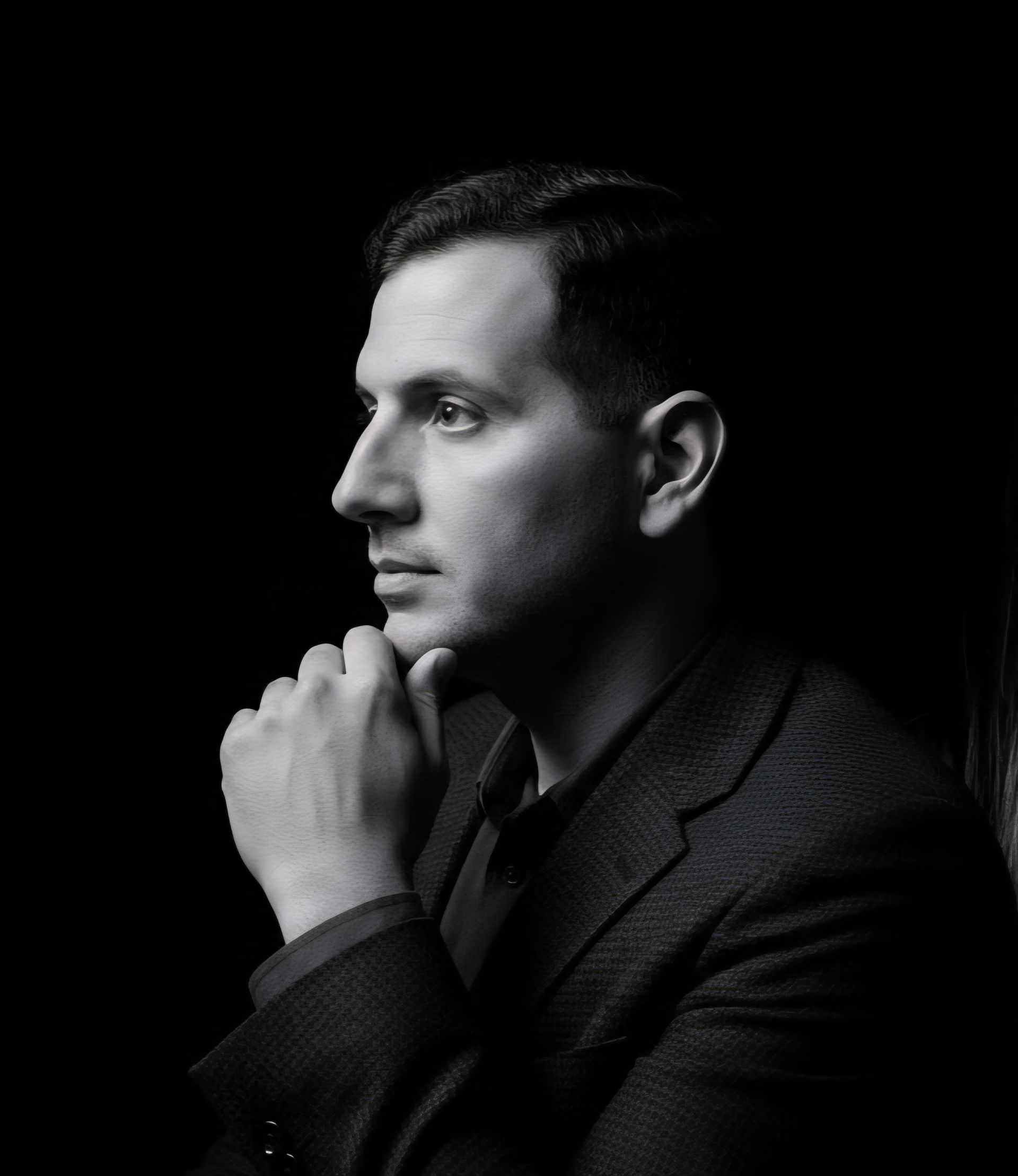
Building for the Next Gen by Nino Mihilli
Nino Mihilli
I Want to Build Things That Outlive My Attention
Why My Definition of Building Has Changed From Creating More to Creating Something That Can Keep Going Without Me
I love starting things.
I've always had ideas.
Businesses.
Technology.
Investments.
Writing.
Systems.
Sometimes more ideas than I have hours in the day.
There is an energy that comes with the beginning of something.
The blank page.
The new company.
The first customer.
The first version of a product.
The moment when something that existed only in your head begins becoming real.
But after years of building, I'm becoming interested in a different question.
Not:
Can I start it?
But:
Can it continue without my constant attention?
That's a much harder test.
Starting Is Exciting. Sustaining Is Different.
Starting something gives you energy.
Sustaining something requires discipline.
At the beginning, the founder can compensate for almost anything.
There's no process?
I'll handle it.
Someone didn't show up?
I'll fix it.
The customer has a problem?
Call me.
The system doesn't work?
I'll find a workaround.
That can actually be an advantage early on.
Small companies survive because founders are willing to do almost anything.
But eventually, that strength can become a weakness.
If every problem requires you, you haven't created independence.
You've created dependency.
I've Been the Bottleneck Before
This isn't theoretical for me.
I've been the person everything comes back to.
The question.
The decision.
The approval.
The problem.
The idea.
And when you're an entrepreneur, that can actually feel good.
People need you.
You're involved.
You're important.
You're solving things.
But there's a hidden problem.
If everything needs you, everything is limited by you.
There are only so many hours in my day.
No amount of ambition changes that.
Eventually, something has to become capable of operating without me touching every piece.
This Is One Reason I've Become Obsessed With Systems
I used to think systems were mostly about efficiency.
Now I think they're about durability.
A good system captures something that previously lived inside someone's head.
How do we handle this?
What happens next?
Who owns it?
What information do they need?
What happens if something goes wrong?
How do we know whether it worked?
Once those answers exist outside the founder's brain, other people can operate.
That creates leverage.
But more importantly, it creates continuity.
A Good Business Should Remember What It Learns
This idea fascinates me.
Businesses make mistakes every day.
They discover things.
A customer responds differently than expected.
A process breaks.
An employee finds a better way.
Something succeeds.
Something fails.
But how much of that knowledge survives?
Too often, the answer is:
Whatever someone remembers.
Then that person leaves.
And the organization forgets.
Six months later, someone else makes the same mistake.
I've become increasingly interested in building companies and technology that learn.
Not simply store data.
Learn from outcomes.
Why did this work?
Why didn't it?
What should change next time?
Human beings do this naturally when we're paying attention.
Organizations should too.
This Is Where AI Becomes Interesting to Me
A lot of the conversation around artificial intelligence is about replacing tasks.
Can AI write this?
Answer that?
Analyze this?
Automate that?
Those capabilities matter.
But I'm interested in something deeper.
Can technology help an organization preserve intelligence?
Can it remember what happened?
Connect information people would have missed?
Notice patterns?
Help someone understand why a decision was made?
Challenge assumptions?
Help the next person start with what the organization has already learned instead of starting over?
That's far more interesting to me than simply generating another email faster.
The Goal Isn't a Company Without People
I want to be clear about that.
I don't dream about building businesses where humans disappear.
People create relationships.
People exercise judgment.
People care.
People lead.
People understand things that don't fit neatly into a database.
Technology should make those people more capable.
If AI can handle repetitive work, maybe an employee has more time for the customer.
If a system can surface the right information, maybe a manager can make a better decision.
If automation prevents a mistake, maybe somebody doesn't have to spend two hours fixing it.
The goal shouldn't be removing humans from business.
The goal should be removing unnecessary friction from human work.
Flat Staffing Has Taught Me This in the Real World
Staffing is a very human business.
People call off.
Customers change requirements.
Schedules move.
Workers need help.
Someone gets sick.
Someone's transportation fails.
A customer suddenly needs more people.
Real life doesn't care how perfect your spreadsheet looked yesterday.
That makes systems even more important.
The system doesn't replace judgment.
It gives the person making the judgment better information.
Who is available?
Who has worked there before?
What happened last time?
What still needs attention?
What was promised?
The better the information, the less the company depends on one person's memory.
That's progress.
I Want People to Own Things Without Waiting for Me
This is something I'm still working on as a leader.
It's easy to say you want employees to take ownership.
It's harder to actually give them enough authority to do it.
Founders sometimes say:
"I want you to make decisions."
Then the first time someone makes a decision differently than we would have, we take control back.
That's not ownership.
If I want capable people around me, I have to allow them to think.
There need to be boundaries.
There need to be standards.
There need to be consequences for reckless decisions.
But there also has to be room.
Otherwise, I'm not developing leaders.
I'm developing people who are very good at asking me questions.
The Same Principle Applies to Parenting
This may be one of the clearest examples.
The goal of raising children isn't to create adults who can't function without you.
When they're young, they need almost everything from you.
Then gradually, if you're doing your job, they need you differently.
You teach.
Guide.
Correct.
Encourage.
Give them responsibility.
Let them make decisions.
Sometimes watch them make mistakes you wish you could prevent.
Eventually, they build lives of their own.
There's something bittersweet about that.
But independence isn't evidence that parenting failed.
It's part of what parenting was preparing them for.
I think leadership has some similarities.
Writing Taught Me Something About Letting Go
When I was working on The Variable, there eventually came a point when the book had to leave my hands.
That's strange for someone who likes improving things.
You can always change another sentence.
Rewrite another paragraph.
Question another chapter.
But eventually, the work has to exist without you constantly touching it.
A reader opens the book somewhere I've never been.
They experience the story without me standing next to them explaining what I meant.
The work has to stand on its own.
There's something beautiful about that.
You build it.
Then you release it.
I Think Legacy Is Often Misunderstood
When people hear the word legacy, they sometimes imagine having buildings named after them.
Recognition.
Awards.
People remembering their name.
That's not really what interests me.
I think legacy can be much quieter.
A business that continues providing jobs.
A system that keeps helping customers.
A lesson your child teaches their child.
An employee who becomes a leader because someone once believed in them.
A book sitting on a shelf years after the author wrote it.
An idea someone else improves.
A company culture that continues doing the right thing when the founder isn't in the room.
Maybe nobody remembers who started some of those things.
That's okay.
The impact still happened.
Faith Changed How I Think About What Belongs to Me
Ecclesiastes 3:11 says:
"He has made everything beautiful in its time."
That phrase—in its time—means more to me as I get older.
There are seasons for building.
Seasons for leading.
Seasons for teaching.
Seasons for stepping aside.
My faith reminds me that I'm a steward, not the permanent owner of everything that passes through my hands.
Companies.
Money.
Opportunities.
Ideas.
Even time itself.
Eventually, all of it moves beyond us.
That isn't depressing to me.
It makes the time we have with it more meaningful.
The Best Test May Be What Happens When You Leave
This is a hard question for any founder:
What stops working if I disappear for thirty days?
That question reveals a lot.
If customers don't get answers, there's a problem.
If nobody can make decisions, there's a problem.
If employees don't know what to do, there's a problem.
If nobody understands the finances, there's a problem.
If the entire organization freezes, the founder may have built a job with employees rather than a durable business.
I don't say that judgmentally.
I've been there.
In some areas, I'm still there.
The important part is recognizing it and building toward something better.
I'm Trying to Build With the Next Person in Mind
This has become one of my mental tests.
If someone else had to operate this tomorrow, would they understand it?
If another employee takes over this responsibility, can they see what happened before?
If I'm not available, does the decision still get made?
If somebody joins the company five years from now, do they benefit from what we learned today?
That's a different way of building.
You're not only solving today's problem.
You're leaving a trail for the person coming behind you.
Final Thoughts
I still love beginnings.
I probably always will.
There will always be another idea that gets me excited.
Another business possibility.
Another technology.
Another problem I want to solve.
Another blank page.
But I'm learning that starting isn't the highest form of building.
Durability is.
Can the company operate?
Can the team lead?
Can the system remember?
Can the knowledge compound?
Can the work continue?
Can something you created keep serving people even when your attention has moved somewhere else?
That's what I'm increasingly interested in.
I don't want to spend the rest of my life holding everything together with my own hands.
I want to build things strong enough that eventually I can open those hands.
And they keep going.
— Nino Mihilli
Stay Connected with Nino Mihilli
🌐 Personal Website: https://www.ninomihilli.com
🏢 T47 Group: https://www.t47group.com
👷 Flat Staffing: https://www.flatstaffing.com
📖 Read Nino Mihilli's novel, The Variable, on Amazon: https://www.amazon.com/dp/B0GX3783RG
Follow Nino Mihilli on
LinkedIn, Instagram, X, Facebook, YouTube, Medium, and Substack
for more on entrepreneurship, artificial intelligence, leadership, faith, writing, and what I'm learning while building.