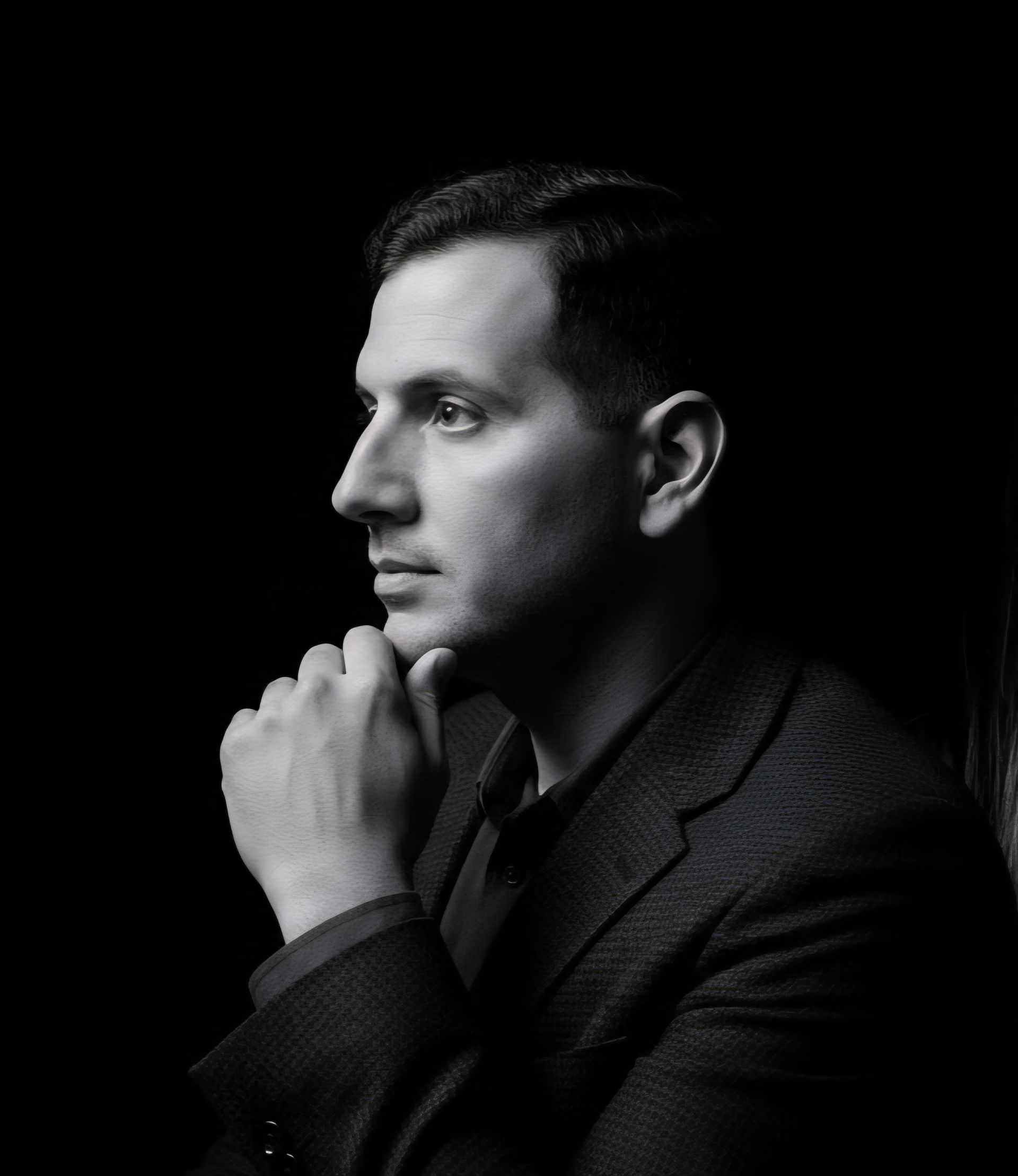
Not Always Business by Nino Mihilli
Nino Mihilli
Not Everything You Love Needs to Become a Business
A Lesson I’m Still Learning About Entrepreneurship, Curiosity, Money, and Leaving Some Things Alone
I have a problem that I suspect a lot of entrepreneurs have.
I can turn almost anything into a business idea.
Show me an interesting product and eventually I'm wondering who manufactures it.
Tell me about an industry and I start wondering where the margins are.
Show me an inefficient process and I'm thinking about how technology could improve it.
I can be sitting somewhere completely unrelated to work and suddenly think:
"There might be a business here."
I've been wired that way for a long time.
I actually like that part of myself.
Curiosity has opened a lot of doors in my life.
But I'm also learning something:
Not everything interesting needs to become a business.
Some things are allowed to simply be interesting.
Entrepreneurs Have Trouble Leaving Things Alone
I don't think we mean to do it.
Our brains just naturally start connecting dots.
You see a problem.
You imagine a solution.
Then the questions begin.
Could this scale?
Who's already doing it?
What would it cost?
Could AI improve it?
Could we build a better version?
Is there a market?
Before long, something you casually noticed has become a company in your head.
That's part of the fun of entrepreneurship.
It's also how you end up with far more ideas than time.
I know that problem well.
Opportunity Isn't the Same as Obligation
This has become an important distinction for me.
Just because I could pursue something doesn't mean I should.
There may genuinely be money in it.
There may genuinely be demand.
It may genuinely be a good idea.
And I can still leave it alone.
That's harder than it sounds.
Entrepreneurs are trained to recognize opportunities.
We're rarely taught that recognizing an opportunity doesn't obligate us to pursue it.
Sometimes the smartest response to a good opportunity is:
"That's interesting. I hope somebody builds it."
Then go back to what you were already building.
Every Yes Quietly Says No to Something Else
This is the part that's easy to miss.
A new project doesn't only require money.
It requires attention.
Meetings.
Decisions.
Research.
Emails.
Problems.
Mental space.
Even if other people operate it, some part of it eventually comes back to you.
That's why I've become much more conscious of the hidden cost of saying yes.
If I give ten hours to something new, where did those ten hours come from?
Another business?
Writing?
Exercise?
Sleep?
My wife?
My children?
My faith?
Thinking?
Sometimes the opportunity isn't expensive because it loses money.
It's expensive because it takes time away from something more valuable.
Money Is a Terrible Reason to Ruin Something You Enjoy
This applies outside business too.
We live in a culture that constantly tells people to monetize themselves.
Good at cooking?
Start a food business.
Like photography?
Sell photos.
Enjoy traveling?
Become a travel creator.
Know something about fitness?
Build a course.
Have an audience?
Monetize it.
Sometimes that's great advice.
Businesses often begin with something someone genuinely loves.
But sometimes turning something into work changes your relationship with it.
The hobby gets deadlines.
The passion gets customers.
The relaxing activity gets metrics.
The thing that used to restore you becomes another obligation.
Not everything needs a revenue model.
Some Things Should Be Protected From Productivity
I'm becoming more convinced of this.
Time with family doesn't need a measurable return.
Reading something because I'm curious doesn't need to become content.
A conversation doesn't need to become networking.
A trip doesn't need to become a business opportunity.
Learning something doesn't need to produce a certificate.
Rest doesn't need to be justified because it will make me more productive tomorrow.
Sometimes the value of something is simply the experience itself.
That's difficult for people who are wired to build.
We're always asking:
What can this become?
Sometimes the better question is:
Can I just enjoy what it already is?
Curiosity Is More Valuable When It Doesn't Always Have an Agenda
I've always believed in staying curious.
The older I get, the more important that becomes to me.
But there's a difference between curiosity and prospecting.
If every new subject has to produce a business opportunity, eventually you stop exploring freely.
You're searching instead of discovering.
Some of the most interesting things I've learned had absolutely nothing to do with whatever I was working on at the time.
Then years later, something connected.
That's one of the strange things about knowledge.
You rarely know which pieces will matter later.
So I want to keep learning things simply because they fascinate me.
No business plan required.
AI Makes It Easier to Chase Every Idea
This is one of the interesting effects of artificial intelligence.
The cost of exploring an idea has dropped dramatically.
You can research a market.
Brainstorm a product.
Create a prototype.
Write copy.
Analyze competitors.
Generate designs.
Build software.
Do things in hours that once might have required weeks and several people.
That's incredible.
But it creates a new problem.
When the cost of starting approaches zero, discipline becomes more important, not less.
Because now I can start almost everything.
That doesn't mean I should.
AI gives us more capability.
It doesn't give us more hours in the day.
I Don't Want My Life to Become One Giant Holding Company
I build businesses.
I think about investments.
I enjoy technology.
I write.
I like discovering opportunities.
Those things are part of me.
But they're not all of me.
I'm also a husband.
A father.
A Christian.
A friend.
A person who enjoys learning.
A person who wants to experience the world.
A person who occasionally wants to sit down at night with chai, milk, and honey without turning the moment into a productivity strategy.
That life matters too.
Actually, it matters more.
If every part of my existence eventually becomes another asset to manage, I've probably missed something.
Success Can Make This Problem Worse
When you're starting out, resources limit you.
You simply can't pursue every idea.
Later, if you become more successful, some of those restrictions disappear.
You have more capital.
More relationships.
More experience.
More technology.
Maybe a team.
Suddenly, ideas that once would have been impossible become possible.
That's when judgment matters even more.
The ability to do more doesn't automatically mean doing more is wise.
Sometimes maturity looks like having the resources to pursue something and choosing not to.
I've Started Asking a Different Question
When something catches my attention, I'm trying to move beyond:
"Could this work?"
Lots of things could work.
I'm more interested in:
"Does this deserve part of my life?"
That's a much higher standard.
Because that's ultimately what every project receives.
A piece of your life.
Maybe fifty hours.
Maybe five hundred.
Maybe five years.
You don't know beforehand.
Money can be replaced.
Time can't.
Once I frame an opportunity that way, the decision sometimes becomes much clearer.
Some Ideas Belong to Someone Else
This was difficult for me to accept when I was younger.
If I saw an opportunity, I felt some urge to capture it.
Now I think differently.
Maybe it's a great idea.
Maybe somebody else should build it.
Maybe I'll tell them about it.
Maybe I'll invest in them.
Maybe I'll simply watch and enjoy seeing somebody solve the problem.
I don't need to own every good idea I encounter.
There's enough opportunity in the world for other people too.
Writing Taught Me to Value Things Beyond Their Economics
Writing The Variable gave me another perspective on this.
Writing a novel is not the most obvious thing for someone running businesses to spend their time doing.
There were certainly more predictable ways to use those hours.
But not every decision needs to be judged only by immediate financial return.
I wanted to write the story.
I wanted to find out whether I could finish a novel.
I wanted to create something different.
That experience had value before a single copy was sold.
That's something businesspeople sometimes forget.
Value and revenue aren't synonyms.
Faith Puts Ambition in Perspective
There's a verse in Mark 8:36 that asks:
"What good is it for someone to gain the whole world, yet forfeit their soul?"
That's one of those verses that becomes more meaningful the more responsibility and opportunity you have.
Ambition isn't automatically wrong.
I believe we're supposed to use our gifts.
Work.
Build.
Create.
Provide.
Serve.
But ambition needs boundaries.
Otherwise, enough is always one accomplishment away.
One more company.
One more investment.
One more deal.
One more milestone.
One more number.
There has to be something in your life that ambition isn't allowed to consume.
I Still Want to Build a Lot
None of this means I'm slowing down and retiring to a rocking chair.
That's not me.
I still have things I want to build.
Businesses I want to improve.
Technology I want to explore.
Ideas I want to test.
Places I want to go.
Things I want to write.
Questions I want answered.
I'm excited about the future.
But I want to become more selective about what earns my attention.
Not less curious.
More intentional.
There's a difference.
Final Thoughts
Entrepreneurs are good at seeing potential.
We look at something and imagine what it could become.
That's a gift.
But every gift needs discipline.
Not every problem is yours to solve.
Not every opportunity is yours to pursue.
Not every skill needs to become income.
Not every interest needs to become a company.
Not every moment needs to become content.
Not every hour needs to produce something measurable.
Some things can simply belong to your life.
Your family.
Your faith.
Your curiosity.
Your friendships.
Your health.
Your hobbies.
Your quiet moments.
Protect those too.
Build businesses.
Make money.
Create things.
Take risks.
Chase the opportunities that truly matter.
But occasionally allow yourself to discover something wonderful and resist the entrepreneur's instinct to ask how you can monetize it.
Sometimes the best return is simply:
I enjoyed that.
And that can be enough.
— Nino Mihilli
Stay Connected with Nino Mihilli
🌐 Personal Website: https://www.ninomihilli.com
🏢 T47 Group: https://www.t47group.com
👷 Flat Staffing: https://www.flatstaffing.com
📖 Read Nino Mihilli's novel, The Variable, on Amazon: https://www.amazon.com/dp/B0GX3783RG
Follow Nino Mihilli on
LinkedIn, Instagram, X, Facebook, YouTube, Medium, and Substack
for more on entrepreneurship, leadership, artificial intelligence, faith, writing, business, and what I'm learning along the way.