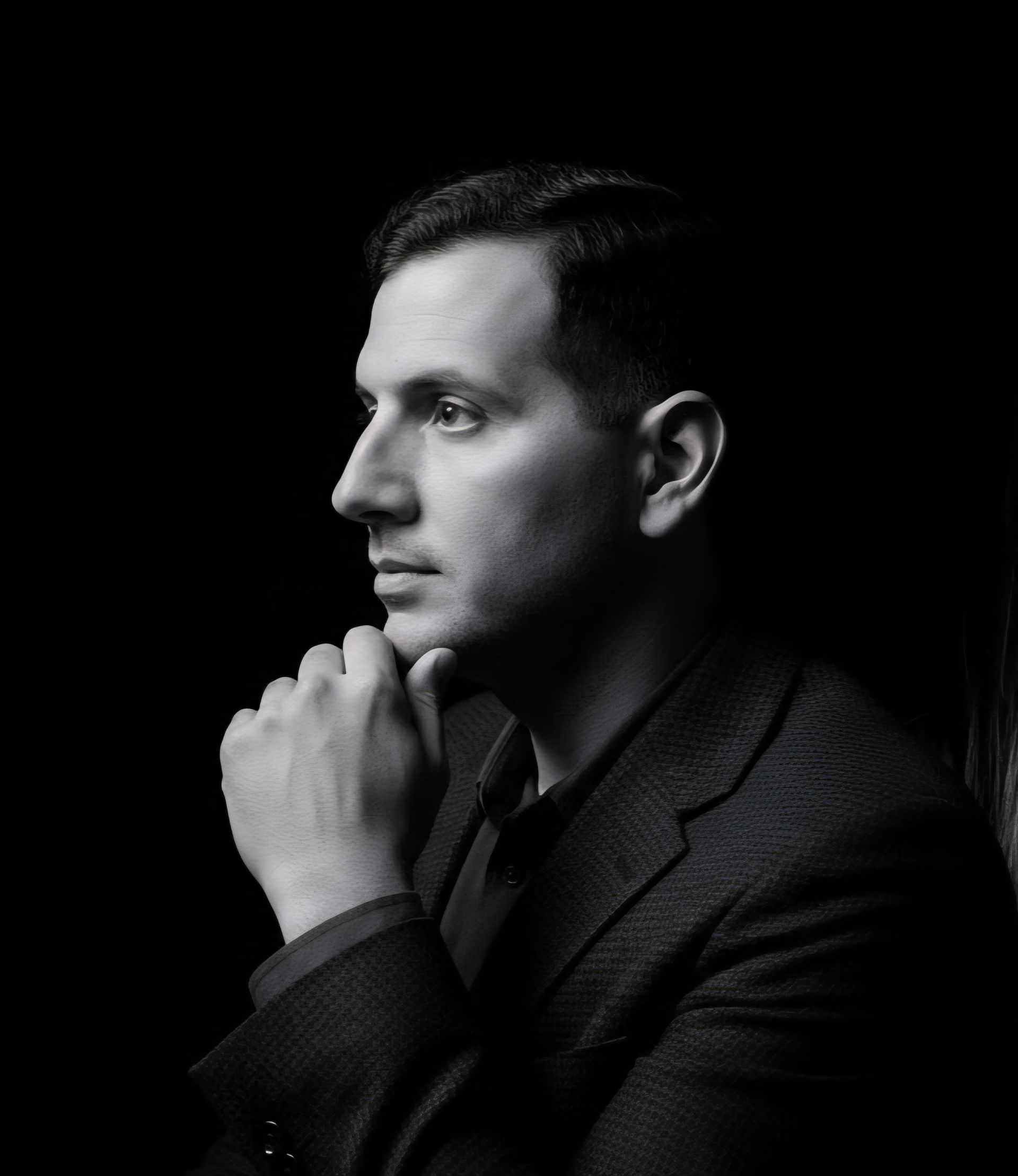
Depending on your Service by Nino Mihilli
Nino Mihilli
When People Depend on Your Business, Everything Changes
What Making Payroll Taught Me About Entrepreneurship, Leadership, Responsibility, and Faith
There is a version of entrepreneurship that looks very attractive from the outside.
Freedom.
Ownership.
Making your own schedule.
Building wealth.
Being your own boss.
Creating something from nothing.
All of those things can be part of entrepreneurship.
But there's another side that doesn't fit quite as nicely into an Instagram post.
People start depending on you.
An employee gets hired.
Then another.
Then another.
And somewhere along the way, the business you started to create opportunity for yourself becomes responsible for creating stability for other people.
That changes you.
At least, it changed me.
Payroll Makes Business Very Real
There are a lot of numbers in business.
Revenue.
Margins.
Expenses.
Accounts receivable.
Cash flow.
Profit.
But payroll feels different.
Because payroll isn't simply an expense.
There's a person on the other side of it.
Someone worked those hours.
They're expecting that money.
And they should.
That paycheck may already have somewhere to go before it ever reaches their bank account.
Rent.
Mortgage.
Groceries.
Car payment.
Electricity.
Childcare.
School expenses.
Life.
When you've been responsible for payroll long enough, you stop seeing it as just another line on the P&L.
At least I did.
The Employee Usually Doesn't See the Calculation
And they shouldn't have to.
An employee comes to work.
Does the job.
Goes home.
Meanwhile, the owner may be thinking about:
Did that customer pay?
What's coming out this week?
How much is insurance?
What happened to workers' compensation costs?
What's payroll going to be?
When is that receivable arriving?
Can we afford this hire?
Can we afford not to make this hire?
The employee shouldn't have to carry all of that.
That's part of the responsibility the owner accepted.
But I think it's one reason business ownership can feel lonely sometimes.
There are calculations you make quietly because other people are depending on you to figure them out.
Staffing Magnifies the Responsibility
Running Flat Staffing has made this especially real for me.
Staffing has an interesting cash-flow dynamic.
Workers perform the work now.
They need to be paid according to payroll.
The customer may pay the invoice later.
Those timelines don't always match.
The worker doesn't care that the invoice is still outstanding.
Nor should they.
They did their job.
We have to do ours.
When you're responsible for a large group of workers, those numbers add up quickly.
But again, I try not to forget what the numbers represent.
People.
Revenue Isn't Your Money
This was one of those lessons business teaches quickly.
A customer sends a large payment and, especially when you're inexperienced, it can look like the business just made a lot of money.
Then reality starts subtracting.
Payroll.
Payroll taxes.
Insurance.
Rent.
Utilities.
Software.
Marketing.
Equipment.
Vendors.
Taxes.
Unexpected problems.
Suddenly that big number looks very different.
Revenue can make a company look successful from the outside.
Cash flow determines whether it can keep its promises.
That distinction matters.
Growth Can Actually Increase the Pressure
This surprises some people.
More business doesn't automatically mean less stress.
Sometimes growth creates more pressure before it creates more profit.
A new customer might require more workers.
More recruiting.
More payroll.
More administration.
More insurance exposure.
More management.
More working capital.
More things that can go wrong.
That's why I've learned not to celebrate revenue without understanding what comes attached to it.
Not all growth is good growth.
The right growth makes the company stronger.
The wrong growth can stretch it until something breaks.
Being Responsible for People Changes How You Take Risk
I've written about how my relationship with risk has changed.
This is one reason why.
When you're young and making a decision entirely for yourself, the downside is mostly yours.
Lose your own money?
You deal with it.
Start something that fails?
You start again.
But when you have employees, the equation changes.
Now a reckless decision can affect someone who never agreed to take that risk.
That's something I think about.
I'm still an entrepreneur.
I still take risks.
I still want to build ambitious things.
But there's a difference between being courageous with an opportunity and gambling with the stability of something other people depend on.
Leadership requires knowing the difference.
Employees Are Taking a Risk on You Too
We usually think of the company as taking a chance on the employee.
And it is.
But the employee is also taking a chance on the company.
They could work somewhere else.
They're giving you hours of their life.
They're trusting the company to remain healthy.
They're trusting management to treat them fairly.
They're trusting that the promises made during hiring have some connection to reality.
Good employees have options.
That's important for business owners to remember.
Employment isn't charity from the company.
It's an exchange.
The employee provides value.
The business provides value.
The relationship works when both sides honor that exchange.
I Haven't Always Gotten Leadership Right
The longer I do this, the more comfortable I am admitting that.
I've made bad hires.
I've waited too long to make changes.
I've probably made changes too quickly at other times.
I've misunderstood what motivated someone.
I've expected people to think like an owner when they weren't owners.
I've learned lessons the expensive way.
My years owning Boost Mobile stores taught me a lot about that.
At one point, I thought turnover mostly meant I needed better employees.
Eventually, I realized some of the problem was me.
I wasn't always matching people to the right environment.
I wasn't asking enough questions before hiring.
That's one of the strange gifts of experience.
You look backward and see things that were invisible while you were living them.
A Job Is More Than a Transaction
I don't want to over-romanticize employment.
A company isn't a family.
There are financial realities.
Sometimes positions have to change.
Sometimes an employee isn't the right fit.
Sometimes hours need to be adjusted.
Sometimes businesses go through difficult periods.
Leaders have to make hard decisions.
But the fact that business is economic doesn't mean it has to become impersonal.
You can make a difficult decision and still care about the person affected by it.
You can be financially disciplined without becoming cold.
I think good leadership requires both.
This Is Why I Care About Building Stronger Systems
Responsibility is also why I've become increasingly interested in systems, automation, and AI.
A healthier company is better for everyone who depends on it.
If technology helps us reduce mistakes, that's valuable.
If better systems improve collections, that's valuable.
If automation saves employees from repetitive work, that's valuable.
If better information helps us make smarter decisions, that's valuable.
If AI helps a small company operate with capabilities that once required a much larger organization, that's exciting to me.
Technology isn't only about efficiency.
Used properly, it can create resilience.
And resilient businesses can keep more promises.
But Efficiency Can't Become the Only Goal
There's a danger here too.
If everything becomes a spreadsheet, human beings can start looking like costs instead of people.
I don't want to think that way.
Yes, labor is an expense.
Anyone running a business has to understand that.
But the person represented by that expense has a name.
A family.
A story.
Goals.
Problems.
Potential.
The challenge for leaders is being able to see both realities at once.
The numbers matter.
The people matter.
Pretending either one doesn't exist eventually hurts the other.
Faith Makes Responsibility Heavier—and Clearer
My faith affects how I think about this.
Luke 12:48 says:
"From everyone who has been given much, much will be demanded."
I've always viewed leadership as a form of stewardship.
If God gives me an opportunity to build something, that opportunity comes with responsibility.
If people trust me with their employment, responsibility.
If customers trust us with their business, responsibility.
If employees trust me to lead, responsibility.
Success doesn't remove responsibility.
It increases it.
Sometimes Being the Owner Means Going Without
This part isn't discussed much.
There are moments in business when the owner goes last.
Maybe you delay something you wanted.
Maybe you don't take as much out of the company.
Maybe you inject money instead of withdrawing it.
Maybe you spend the weekend fixing something because Monday is coming whether you're ready or not.
That's not a complaint.
It's part of the job.
If you want the upside of ownership, you have to accept the responsibility of ownership too.
You don't get to keep one and outsource the other.
I Think Differently About Jobs Now
After years in staffing and entrepreneurship, I've come to appreciate job creation differently.
People sometimes talk about creating jobs as if it's simply a number to celebrate.
Ten new jobs.
Fifty new jobs.
A hundred new jobs.
That's great.
But every new job is also a promise.
A promise that the company needs to become strong enough to sustain.
That's why I want to build businesses that last.
Not businesses that look impressive for a moment.
Durability matters.
The Goal Isn't to Carry Everything Yourself
Responsibility doesn't mean the owner personally does everything.
I've learned that lesson too.
Good leaders build teams.
Create systems.
Delegate.
Develop people.
Give others ownership.
Eventually, the company should become stronger than any single person inside it.
Including the founder.
That's not escaping responsibility.
That's fulfilling it.
Because the strongest thing I can do for people who depend on a business is help build a business that doesn't depend entirely on me.
Final Thoughts
Entrepreneurship has given me freedom.
Opportunity.
Challenges.
Failures.
Some wins.
A lot of lessons.
And relationships I never would have had otherwise.
I still love building.
Probably always will.
But my definition of entrepreneurship has changed.
It's not simply:
What can I build for myself?
It's also:
What am I responsible for because I built it?
Customers depend on the promise.
Employees depend on the company.
Families may depend on those employees.
Vendors depend on payments.
Partners depend on your word.
Suddenly, business becomes much bigger than the founder.
That's when ownership becomes stewardship.
So when I look at payroll today, I still see numbers.
I have to.
But I also see something else.
Responsibility.
And I never want to become so comfortable signing the front of the paycheck that I forget the person signing the back.
— Nino Mihilli
Stay Connected with Nino Mihilli
🌐 Personal Website: https://www.ninomihilli.com
🏢 T47 Group: https://www.t47group.com
👷 Flat Staffing: https://www.flatstaffing.com
📖 Read Nino Mihilli's novel, The Variable, on Amazon: https://www.amazon.com/dp/B0GX3783RG
Follow Nino Mihilli on LinkedIn, Instagram, X, Facebook, YouTube, Medium, and Substack for more on entrepreneurship, staffing, leadership, artificial intelligence, faith, writing, and lessons from building businesses in Phoenix, Arizona.