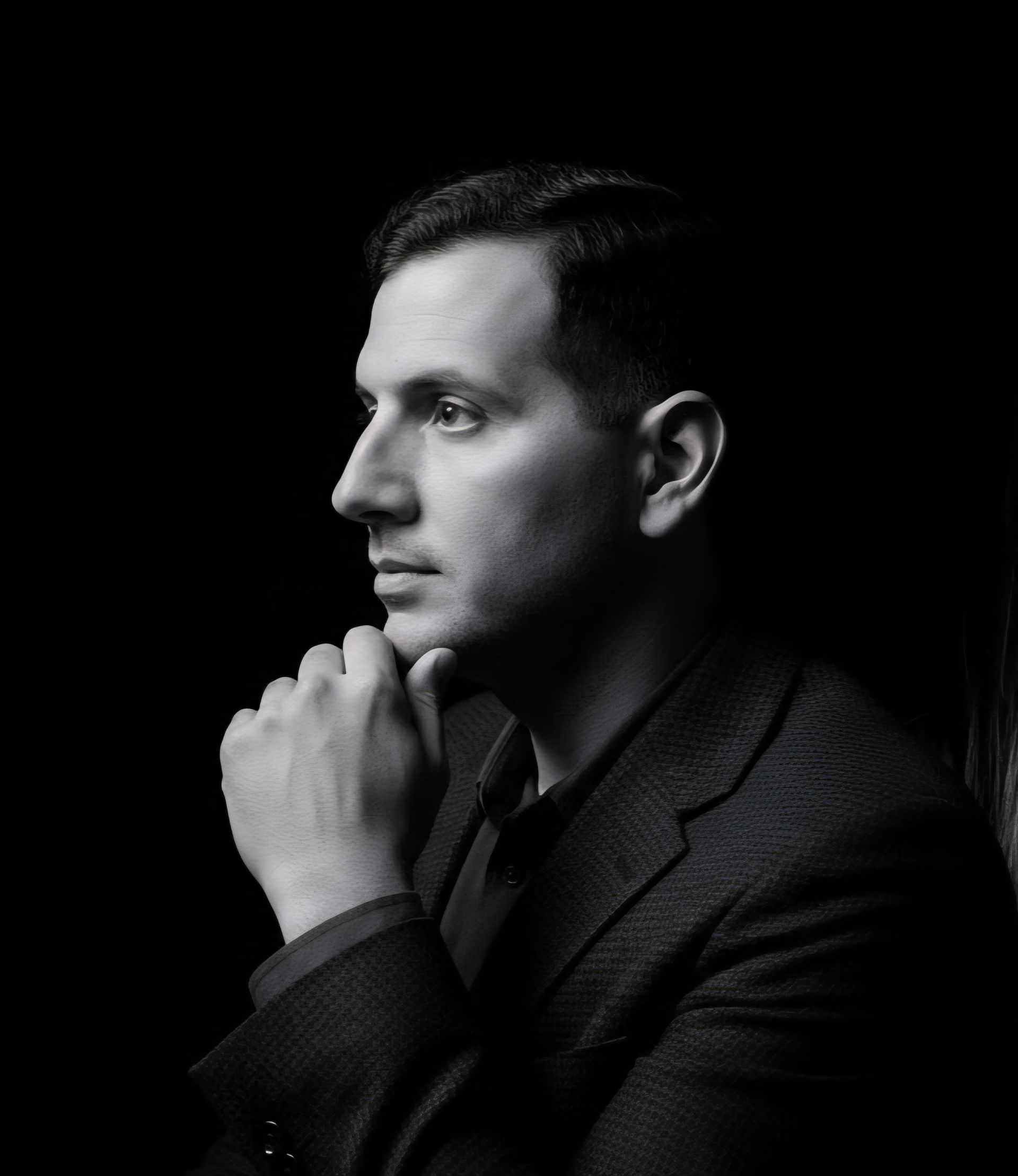
Does your Business Need you by Nino Mihilli
Nino Mihilli
If Your Business Needs You for Everything, You Haven't Built a Business Yet
What Entrepreneurship Taught Me About Delegation, Systems, Leadership, and Getting Out of the Way
There was a time when being needed for everything made me feel important.
Customer problem?
Call me.
Employee question?
Ask me.
Something needs approval?
Send it to me.
Something breaks?
I'll figure it out.
I think a lot of entrepreneurs go through this stage.
In the beginning, it's almost unavoidable.
You're the salesperson.
Manager.
Problem solver.
Decision maker.
Sometimes you're even the person taking out the trash.
That's part of building a business.
But eventually I learned something uncomfortable:
Being needed for everything isn't proof that you're a great leader.
Sometimes it's proof that you haven't built the right systems yet.
The Founder Becomes the System
Most businesses start with people before processes.
You don't have a manual.
You have memory.
You don't have an escalation procedure.
You have the owner's phone number.
You don't have software tracking everything.
You have a notebook, spreadsheet, text messages, or whatever works.
And honestly?
That's fine in the beginning.
I'm a big believer in figuring things out before overcomplicating them.
The problem comes when the company grows but the operating model doesn't.
Ten people are now depending on the same system that worked when there were two.
And that system is:
Ask the owner.
Eventually, the owner becomes the bottleneck.
I Know What This Feels Like
I've operated businesses where I knew too much.
That sounds like a strange problem.
But it is one.
You know why something is done a certain way.
You remember what happened with that customer three months ago.
You know which employee handles a particular situation best.
You know the workaround when something breaks.
So people naturally come to you.
It's faster.
Until it isn't.
Because every answer creates another reason for people to ask you next time.
Without realizing it, you can train an organization not to think without you.
That's dangerous.
Good Employees Need Ownership
One of the things I've learned through Flat Staffing is that good people usually want to contribute more than we allow them to.
They don't necessarily want someone looking over their shoulder all day.
They want to understand the goal.
Know the boundaries.
Have the tools.
Then be trusted to do their job.
That doesn't mean zero accountability.
Actually, I think clear ownership creates more accountability.
If five people are vaguely responsible for something, nobody really owns it.
If one person knows:
"This is mine."
Now there's clarity.
Delegation Isn't Dumping Work on Someone
I used to think delegation was mostly about taking something off my plate.
I've changed my mind.
Real delegation is transferring ownership.
That means the person needs enough information to succeed.
Enough authority to make reasonable decisions.
Clear expectations.
A way to measure whether the outcome was achieved.
And support when something unusual happens.
If I hand someone a task but require them to ask permission for every tiny decision, I haven't really delegated.
I've just created another communication channel.
Sometimes Leaders Create the Dependence They Complain About
This one can sting.
I've heard business owners say:
"Nobody can do it like I can."
Maybe that's true.
But why?
Have we taught them?
Documented the process?
Allowed them to make decisions?
Allowed them to make mistakes?
Or do we jump in every time something isn't done exactly the way we would have done it?
That's something I've had to think about in my own leadership.
If I constantly rescue people, I shouldn't be surprised when they wait to be rescued.
Sometimes the team doesn't need a better employee.
They need the leader to stop grabbing the steering wheel.
The Goal Isn't to Make Yourself Useless
I don't believe the entrepreneur should disappear.
The founder still matters.
Vision matters.
Culture matters.
Capital allocation matters.
Relationships matter.
Major decisions matter.
Leadership matters.
But the founder's job should evolve.
If I'm spending my time solving the exact same operational problem for the hundredth time, I need to ask:
Why is this still reaching me?
Maybe the employee needs training.
Maybe responsibility isn't clear.
Maybe we're missing software.
Maybe the process is bad.
Maybe nobody owns the outcome.
Whatever the reason, repeatedly fixing the symptom isn't enough.
Eventually, build the cure.
This Is Why I'm Obsessed With Systems
The more businesses I've built, the more interested I've become in systems.
Not complicated corporate bureaucracy.
Useful systems.
If something happens repeatedly, there should probably be a repeatable way to handle it.
How do we onboard someone?
How do we follow up with a customer?
What happens when someone calls out?
Who owns an employee issue?
Who handles sales?
Who handles billing?
What happens when something goes wrong?
Every question you answer structurally is one fewer question that needs to become an emergency later.
Systems create consistency.
And consistency creates trust.
Small Businesses Especially Need This
Large companies can hide inefficiency for a surprisingly long time.
Small businesses usually can't.
When you have a small team, every person's role matters.
If everyone is doing a little bit of everything, it can feel collaborative.
Sometimes it is.
But it can also become chaotic.
I've learned that people need to know what they own.
Not because I want to create rigid boxes around them.
Because clarity reduces friction.
You can still help each other.
You should.
But everyone should know where the final responsibility sits.
AI Is Going to Change This Dramatically
This is one reason I'm so interested in artificial intelligence.
For small businesses especially, AI gives us an opportunity to systematize things that historically lived inside someone's head.
Imagine an employee doesn't know how to handle a situation.
Instead of immediately calling the manager, maybe the company's knowledge and procedures are available instantly.
AI can help with:
customer follow-up,
scheduling,
documentation,
training,
research,
administrative work,
analysis,
and identifying exceptions that actually require human attention.
That's the part that interests me.
I don't want AI replacing responsibility.
I want AI removing unnecessary dependence.
The technology should help the right person make a better decision without needing five other people involved.
But You Can't Automate Leadership
There's a limit.
AI can't genuinely care about the employee sitting across from you.
It can't replace your responsibility to create culture.
It can't take accountability for a promise you made.
It can't become the character of the organization.
Those remain human responsibilities.
The future I'm interested in isn't businesses with fewer humans because machines do everything.
It's businesses where humans spend less time doing things machines are better at and more time doing things humans are uniquely good at.
Leading.
Creating.
Selling.
Building relationships.
Solving unusual problems.
Helping people.
Making judgment calls.
Writing a Book Taught Me Something Similar
When I wrote The Variable, there was no delegation.
Ultimately, the words had to become my responsibility.
But even there, I learned the value of process.
An idea needed structure.
Structure became chapters.
Chapters became a manuscript.
The manuscript needed revision.
Eventually, something that initially felt enormous became a sequence of smaller problems that could be solved.
That's what systems do.
They turn overwhelming outcomes into manageable steps.
Businesses need the same thing.
Jesus Didn't Try to Do Everything Alone
My faith has shaped how I think about leadership too.
One thing that stands out throughout Scripture is delegation.
Jesus developed disciples.
Moses learned that trying to personally handle every dispute wasn't sustainable.
In Exodus 18:17–18, Moses' father-in-law tells him:
"What you are doing is not good. You and these people who come to you will only wear yourselves out."
Thousands of years later, entrepreneurs are still learning the same lesson.
You cannot carry everything yourself.
And you're not supposed to.
Letting Go Requires Trust
This may be the hardest part.
When you've built something, you care deeply about it.
You know how you want customers treated.
You know how you want problems handled.
Giving someone else responsibility means accepting that they may not do everything exactly the way you would.
That's uncomfortable.
But I've learned to distinguish between:
different
and
wrong.
Those aren't the same thing.
Sometimes an employee's way works just as well.
Sometimes it's better.
You won't discover that if you never let them try.
The Business Should Become Stronger Than the Founder
This is increasingly how I think about what I'm building.
I don't want to be the smartest person every room depends on.
I want smart people.
Clear roles.
Good systems.
Useful technology.
Accountability.
Trust.
And a culture where people solve problems instead of simply passing them upward.
Because eventually, the strongest company isn't the one with the founder who can do everything.
It's the one where the founder doesn't have to.
Final Thoughts
If you're building a small business and everything still runs through you, I'm not criticizing you.
I've been there.
In some areas, I'm still there.
Building systems is a process.
Delegation is a skill.
Trust has to be earned.
People need training.
Roles change as businesses grow.
But I think every founder should keep asking:
Does this really require me?
If yes, handle it.
If no, ask why it's still reaching you.
Train someone.
Create ownership.
Document the process.
Build the system.
Use technology.
Then let people do their jobs.
You don't build a great company by becoming the hero of every story.
You build one by creating an organization filled with people who know what to do when the hero isn't in the room.
That's the kind of business I'm trying to build.
— Nino Mihilli
Stay Connected with Nino Mihilli
🌐 Personal Website: https://www.ninomihilli.com
🏢 T47 Group: https://www.t47group.com
👷 Flat Staffing: https://www.flatstaffing.com
📖 Read Nino Mihilli's novel, The Variable, on Amazon: https://www.amazon.com/dp/B0GX3783RG
Follow Nino Mihilli on LinkedIn, Instagram, X, Facebook, YouTube, Medium, and Substack for more on entrepreneurship, leadership, staffing, artificial intelligence, faith, writing, and the lessons I'm learning while building businesses in Phoenix, Arizona.