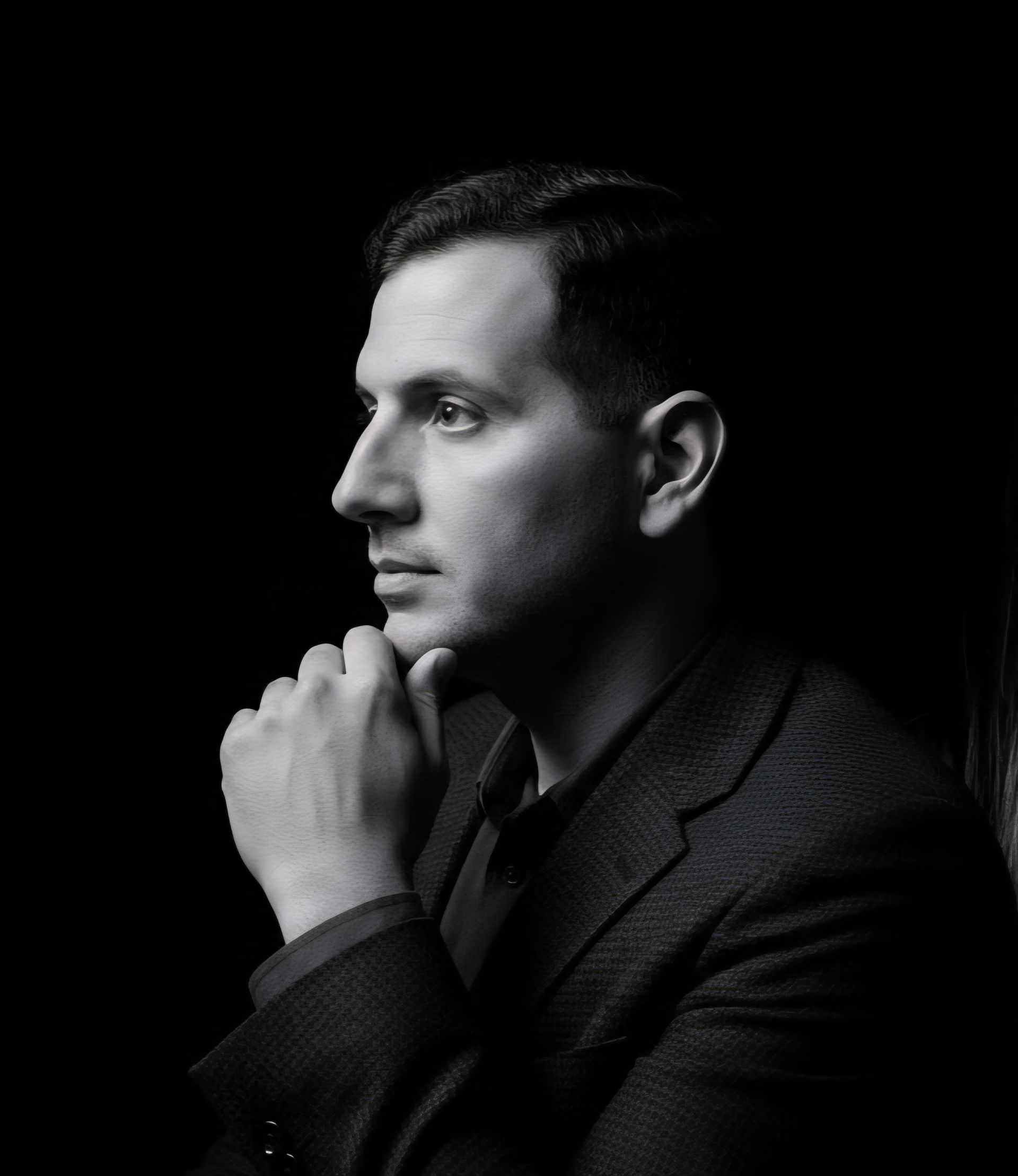
What is a Business by Nino Mihilli
Nino Mihilli
A Business Is Really a Collection of Promises
What Years of Entrepreneurship Taught Me About Customers, Employees, Trust, and Keeping Your Word
The older I get in business, the less complicated I think business really is.
We create strategies.
Build websites.
Run advertisements.
Track KPIs.
Implement software.
Study competitors.
Build systems.
All of those things matter.
But underneath everything, I think a business is something much simpler.
A business is a collection of promises.
You promise a customer you'll deliver something.
You promise an employee you'll pay them.
You promise a vendor you'll honor an agreement.
You promise your team you'll lead.
You promise the market that what you're selling will do what you said it would do.
The strength of a business depends largely on how often those promises are kept.
The Customer Is Buying a Promise
Think about almost anything you've ever purchased.
You're buying something that doesn't completely exist yet.
Hire a staffing company?
You're trusting that workers will show up.
Hire a contractor?
You're trusting that the work will be completed correctly.
Order something online?
You're trusting that what's inside the box will resemble what was on the screen.
Buy software?
You're trusting that it will solve the problem the company said it would solve.
Even when you're buying a physical product, part of the transaction is trust.
The company makes a promise.
The customer gives them money.
Then reality determines whether the promise was true.
That's business.
Staffing Made This Very Real for Me
Running Flat Staffing has probably made me appreciate this more than almost anything else I've done.
Staffing is a business built almost entirely around promises.
A customer says:
"We need this many people at this location at this time."
Now the clock starts.
Workers need to be recruited.
Confirmed.
Scheduled.
Communicated with.
Dispatched.
Sometimes someone calls out.
Sometimes plans change.
Sometimes a client suddenly needs more people.
Sometimes something happens that nobody predicted.
The customer doesn't care about all the activity happening behind the scenes.
They care about the promise.
Will the people be there?
That's what they hired us for.
Payroll Is a Promise Too
There's another side of staffing that customers don't always see.
Workers are trusting us too.
They worked the hours.
Now they're expecting to be paid correctly and on time.
That is a promise.
And it's one I take seriously.
I've been responsible for payroll long enough to know there is nothing abstract about it.
That paycheck might be someone's rent.
Groceries.
Electric bill.
Car payment.
Something their child needs.
When you own a business, numbers on a spreadsheet represent real people.
I think leaders should remember that.
Your Employees Are Listening to Your Promises
Companies make promises to employees constantly.
Sometimes without realizing it.
"We're going to give you an opportunity."
"We'll train you."
"We value our people."
"We want you to grow."
"We're a team."
Those words are easy.
Employees eventually compare them with behavior.
Do we actually develop people?
Do we listen?
Do we treat them fairly?
Do we communicate when things change?
Do we appreciate good work?
Do we admit when leadership made a mistake?
Culture isn't what the company writes on the wall.
Culture is what employees learn they can expect from the company.
In other words, it's the promises that repeatedly become reality.
This Is Why Small Things Matter
I've learned that trust rarely disappears because of one giant dramatic event.
Usually it erodes.
A callback doesn't happen.
An invoice isn't explained.
Someone says they'll handle something and forgets.
A deadline gets missed.
Then another.
None of these moments seem catastrophic individually.
But they accumulate.
So do the opposite moments.
You call when you said you would.
You admit the mistake.
You fix the invoice.
You show up.
You follow through.
You do it again.
Eventually people stop wondering whether they can trust you.
They already know.
That's one of the most valuable assets a business can build.
Technology Can't Replace This
I'm extremely optimistic about AI and technology.
I'm spending a significant part of my life learning about it and building with it.
I want technology handling repetitive work.
I want better automation.
Better information.
Better systems.
Faster decisions.
Fewer unnecessary administrative tasks.
But there's something I don't think AI eliminates:
Responsibility.
Software can remind me about a promise.
Automation can help fulfill it.
AI can identify that we're at risk of missing it.
But ultimately, somebody has to own the outcome.
That's an important distinction.
Technology should help businesses become more reliable.
It shouldn't give us more sophisticated excuses.
A Business Gets Stronger When Promises Become Systems
This is something I'm increasingly focused on.
In the beginning, founders often personally carry every promise.
The customer needs something?
Founder handles it.
Employee has a problem?
Founder handles it.
Invoice needs fixing?
Founder handles it.
That works for a while.
Then the company grows.
Eventually, if every promise depends on the founder remembering everything, the founder becomes the bottleneck.
That's why systems matter.
A good system is essentially a way of saying:
"This promise is important enough that we shouldn't rely on someone's memory to keep it."
That's how I increasingly think about software, processes, checklists, automation, and accountability.
They aren't bureaucracy when they're designed properly.
They're infrastructure for keeping your word.
Your Name Is a Promise Too
This becomes even more personal when your name is attached to what you're building.
I've been building my personal brand more intentionally.
Writing here.
Publishing The Variable.
Sharing what I've learned.
Talking about business, faith, leadership, technology, mistakes, and ideas.
There's responsibility in that too.
If my name is on something, I want people to associate it with substance.
Not perfection.
I'll make mistakes.
I've made plenty already.
But I want there to be consistency between what I say and how I actually operate.
A personal brand without that isn't really a brand.
It's marketing.
Faith Makes the Standard Higher
My faith makes this subject impossible for me to separate from character.
Matthew 5:37 says:
"All you need to say is simply 'Yes' or 'No.'"
I've always found the simplicity of that powerful.
If you say you're going to do something, do everything you reasonably can to do it.
You won't always succeed.
Circumstances change.
Mistakes happen.
Sometimes you simply can't deliver what you expected.
But when that happens, own it.
Communicate.
Tell the truth.
Try to make it right.
I think people are much more forgiving of honest failure than they are of dishonesty and avoidance.
Sometimes the Best Business Decision Costs Money
This is where values get tested.
Keeping a promise isn't difficult when keeping it is profitable.
The real test comes when keeping it costs you.
Maybe you quoted something incorrectly.
Maybe your company made the mistake.
Maybe fixing the problem is going to hurt.
Now what?
Those moments tell you what your values actually are.
Every business will eventually face them.
You can usually find a justification for protecting the money.
Sometimes there may even be legitimate reasons you can't absorb the entire loss.
But I think there's tremendous long-term value in asking:
What would I want this company to do if I were the customer?
That question has a way of simplifying things.
Reputation Is the Memory of Your Promises
I've written before about integrity.
But reputation is what happens after integrity gets tested repeatedly.
People remember patterns.
They remember the company that always comes through.
They remember the employee who can be counted on.
They remember the salesperson who doesn't disappear after the contract is signed.
They remember the business owner who answers the uncomfortable call.
Over time, those memories become reputation.
And reputation eventually becomes opportunity.
Referrals.
Relationships.
Repeat customers.
Introductions.
People willing to take a chance on your next idea because of how you handled the previous one.
You can't buy that kind of trust with an advertisement.
Growth Creates More Promises
This is something entrepreneurs need to remember.
Growth sounds exciting.
More customers.
More revenue.
More employees.
More locations.
More products.
But every layer of growth creates additional promises.
Ten customers create one level of responsibility.
A thousand create another.
Five employees create one management challenge.
Fifty create another.
So the question isn't only:
Can we sell more?
It's:
Can we reliably deliver more?
Those are not the same question.
Sometimes saying no to new business until your systems catch up is better than saying yes and disappointing everyone.
Final Thoughts
I've built businesses in different industries.
Retail.
Staffing.
Technology.
I've invested.
I've written and published a book.
And the environments may look completely different.
But underneath them, the principle keeps showing up.
Say what you're going to do.
Then do your best to do it.
When you can't, communicate.
When you make a mistake, own it.
When the company grows, build systems that help your people keep the promises you've made.
And never forget that behind every transaction is another human being trusting you to do something.
Business can become complicated.
Trust isn't.
Make fewer promises casually.
Keep more promises consistently.
Do that long enough, and you'll build something much more valuable than revenue.
You'll build a name people believe.
— Nino Mihilli
Stay Connected with Nino Mihilli
🌐 Personal Website: https://www.ninomihilli.com
🏢 T47 Group: https://www.t47group.com
👷 Flat Staffing: https://www.flatstaffing.com
📖 Read Nino Mihilli's novel, The Variable, on Amazon: https://www.amazon.com/dp/B0GX3783RG
Follow Nino Mihilli on LinkedIn, Instagram, X, Facebook, YouTube, Medium, and Substack for more on entrepreneurship, staffing, artificial intelligence, leadership, faith, writing, and lessons from building businesses in Phoenix, Arizona.