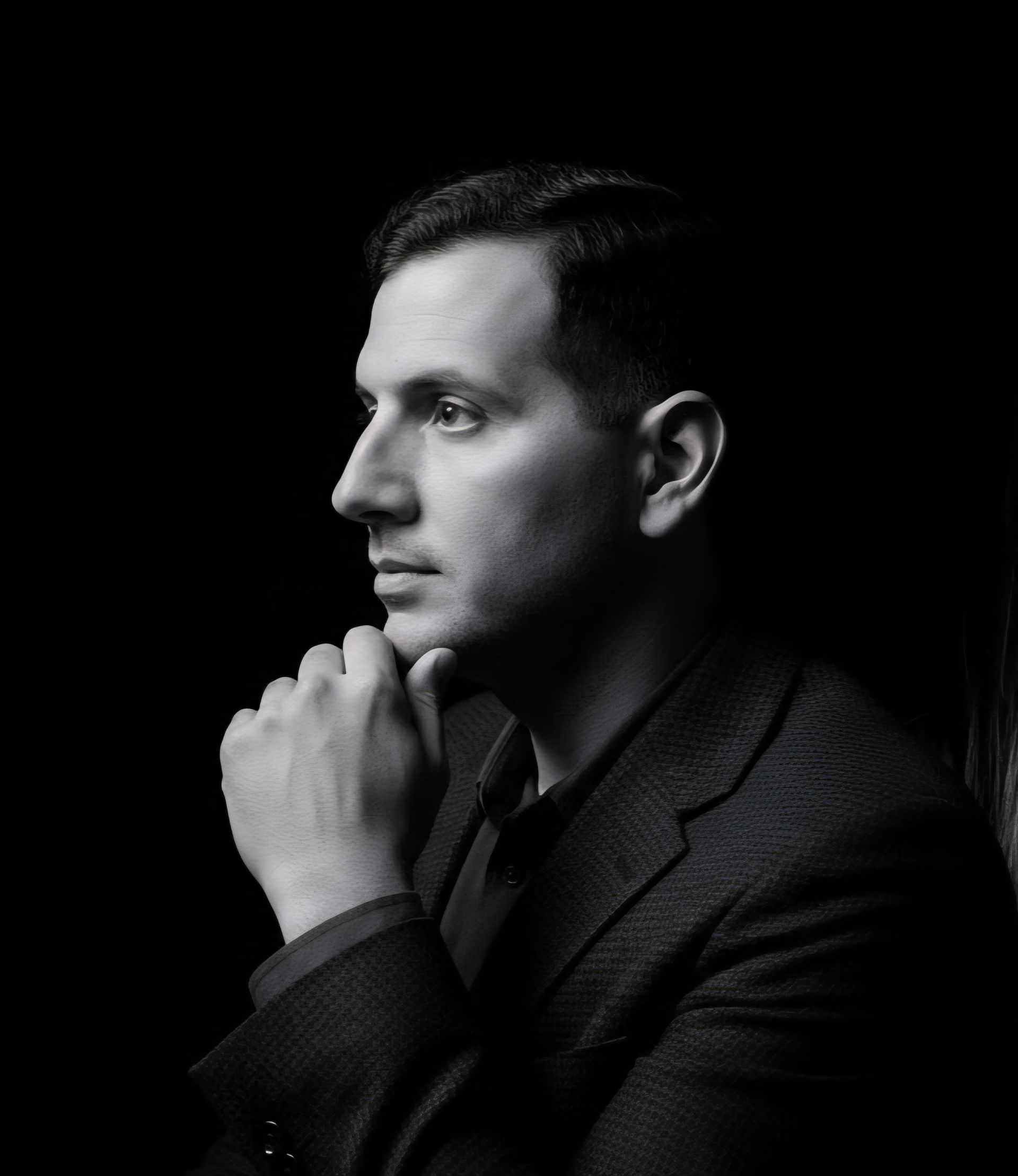
Scared money doesn't make money by Nino Mihilli
Nino Mihilli
I've Never Been Afraid of Risk. I've Learned to Respect It.
Nino Mihilli on Entrepreneurship, Failure, Faith, and Knowing When to Take the Shot
People sometimes assume entrepreneurs love risk.
I don't think that's quite right.
At least, it's not how I see it anymore.
I've taken plenty of risks.
Started businesses.
Invested money.
Entered industries I didn't completely understand.
Built technology.
Written and published a novel.
Put ideas into the world knowing they could fail.
But I don't wake up thinking:
"How can I take more risk today?"
I think about something different.
Is this risk worth taking?
There's a big difference.
Courage and Recklessness Aren't the Same Thing
When I was younger, I probably confused the two more than I do today.
Entrepreneurs hear phrases like:
"Go all in."
"Burn the boats."
"Bet on yourself."
They sound great on social media.
Sometimes they're terrible advice.
If you're supporting a family, employing people, managing payroll, or responsible for other people's capital, blindly going "all in" isn't automatically courageous.
Sometimes it's irresponsible.
I've learned that courage isn't ignoring what can go wrong.
It's understanding what can go wrong and deciding the opportunity is still worth pursuing.
I Ask About the Downside First
This has become one of the biggest changes in how I think.
When an opportunity looks exciting, our minds naturally race toward the upside.
What if this works?
How big could it become?
How much could we make?
Those are fun questions.
I've learned to ask another one first:
What happens if I'm wrong?
Can I survive the loss?
Can the business survive it?
Does this mistake threaten something important?
Can I structure the decision so the downside is limited while keeping meaningful upside?
If being wrong destroys you, the opportunity needs to be extraordinary.
If being wrong is manageable and being right could materially change the outcome, now I'm interested.
Entrepreneurship Is Already a Risk
Starting a business is inherently uncertain.
Customers aren't guaranteed.
Employees aren't guaranteed to work out.
Competitors react.
Markets change.
Costs increase.
Technology changes the rules.
I've experienced enough of those surprises to know that the spreadsheet isn't reality.
It's a model of what we hope reality might look like.
That's why I don't believe entrepreneurs should add unnecessary risk simply to prove they're bold.
Business will provide plenty on its own.
My Retail Years Taught Me This
Looking back at my earlier businesses, I can see decisions I would structure differently today.
That's experience.
At the time, I didn't know what I didn't know.
You learn.
You lose money.
You make a bad hire.
You overestimate demand.
You underestimate expenses.
You discover that something you thought would be easy isn't.
Those lessons change your relationship with risk.
They certainly changed mine.
I still take chances.
I just ask better questions before I take them.
Flat Staffing Changed the Equation
Running a staffing company adds another dimension.
When other people depend on the company, risk stops being purely personal.
Employees expect payroll.
Customers depend on workers arriving.
Your team depends on the business remaining healthy.
That responsibility changes you.
There's a difference between risking your own money on an idea and risking the stability of an organization people depend on.
As a leader, you have to know which one you're doing.
Technology Rewards Smart Experimentation
One thing I love about technology today—especially AI—is how cheaply some ideas can be tested.
Years ago, validating certain business concepts might have required significant capital.
Today, sometimes you can prototype an idea quickly, test assumptions, gather information, and decide whether it deserves greater investment.
That's powerful.
It means instead of making one enormous bet, we can sometimes make several smaller experiments.
Learn.
Adjust.
Then put more resources behind what the evidence supports.
That's a form of risk management I think entrepreneurs should embrace.
Don't risk $100,000 to answer a question you could answer for $1,000.
The Variable Was a Different Kind of Risk
Writing The Variable wasn't primarily a financial risk.
It was personal.
When you create something, you're putting part of yourself in front of people.
Someone might love it.
Someone might hate it.
Someone might ignore it completely.
That's risk too.
The safest option would have been never publishing it.
Then nobody could criticize it.
But nobody could read it either.
Sometimes avoiding risk also means avoiding possibility.
That's the part we forget.
Faith Isn't a Guarantee of the Outcome
My faith plays a major role in how I approach uncertainty.
But faith doesn't mean assuming God will make every business decision work because I prayed about it.
I've made decisions that didn't work.
I've prayed about things that didn't happen the way I wanted.
Faith isn't certainty about my preferred outcome.
It's trust in God regardless of the outcome.
Proverbs 16:3 says:
"Commit to the Lord whatever you do, and he will establish your plans."
For me, that means pray.
Seek wisdom.
Do the work.
Make the best decision you can.
Then understand that you're still not in control of everything.
I've become much more comfortable with that.
The Risk of Doing Nothing
There's another side to this conversation.
We talk about the risk of action.
We rarely calculate the risk of inaction.
What happens if you don't start?
What happens if your company refuses to adopt new technology?
What happens if you never make the call?
What happens if you stay comfortable for another ten years?
Doing nothing can feel safe because there's no immediate loss.
But sometimes doing nothing is the biggest risk of all.
The world doesn't stop moving because we decide to stand still.
Protect What You Can't Afford to Lose
This is probably my biggest principle today.
There are things worth risking.
Money.
Time.
Comfort.
Ego.
There are things I'm much less willing to gamble.
My faith.
My family.
My integrity.
My reputation.
The ability to keep my word.
Understanding that distinction makes other decisions easier.
Know what's negotiable.
Know what isn't.
Take the Shot
After all of this, I still believe entrepreneurs need courage.
Analysis can become another form of fear.
Eventually, you've gathered enough information.
You've calculated the downside.
You've prayed.
You've asked people you trust.
Now you have to decide.
There comes a moment when another spreadsheet isn't going to give you certainty.
You take the shot.
Sometimes you miss.
I've missed plenty.
But if the downside was survivable, you learn and get another opportunity.
That's the game.
Final Thoughts
I'm not afraid of risk.
I respect it.
That's different.
I want to understand the downside.
I want to know what happens if I'm wrong.
I want the risk to make sense compared with the potential reward.
I want to protect the things that matter most.
Then?
I'm willing to swing.
Because some of the best things in my life existed on the other side of uncertainty.
Businesses.
Ideas.
Technology.
Writing.
Relationships.
Opportunities I couldn't have predicted.
You can't eliminate risk from a meaningful life.
And I don't think we're supposed to.
The goal is to become wise enough to know which risks deserve a yes.
Then courageous enough to take them.
— Nino Mihilli
Stay Connected with Nino Mihilli
🌐 Personal Website: https://www.ninomihilli.com
🏢 T47 Group: https://www.t47group.com
👷 Flat Staffing: https://www.flatstaffing.com
📖 Read Nino Mihilli's novel, The Variable, on Amazon: https://www.amazon.com/dp/B0GX3783RG
Follow Nino Mihilli on LinkedIn, Instagram, X, Facebook, YouTube, Medium, and Substack for more on entrepreneurship, investing, artificial intelligence, leadership, faith, writing, and building businesses from Phoenix, Arizona.