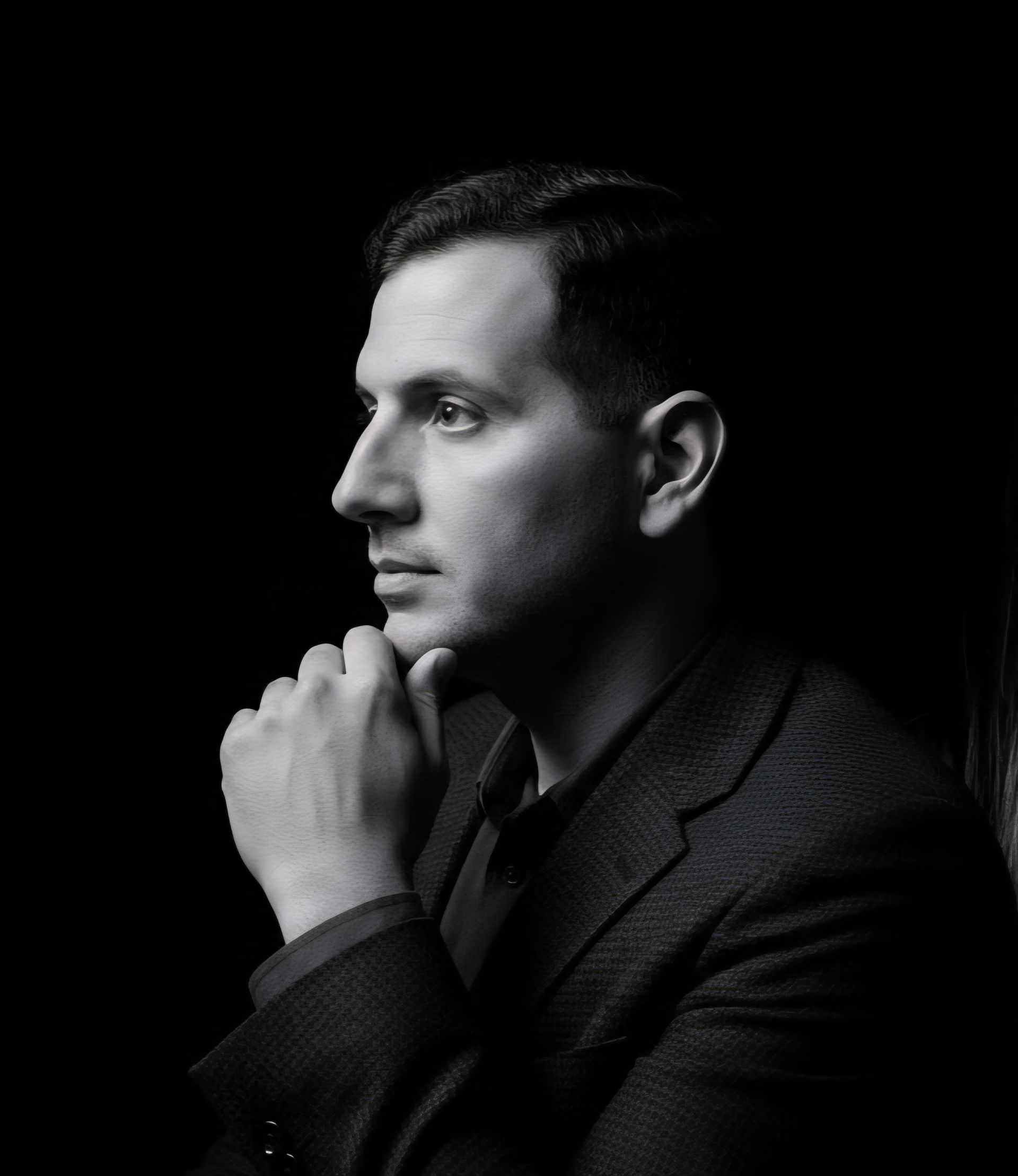
Underestimated by Nino Mihilli
Nino Mihilli
Being Underestimated Has Its Advantages
Why I’ve Learned to Value Quiet Progress More Than Constantly Proving What I Can Do
I've been underestimated before.
Most people probably have.
Maybe someone looked at your education and made an assumption.
Your job.
Your background.
Your age.
Your accent.
Your business.
Where you came from.
Something you failed at.
Something you haven't accomplished yet.
And naturally, there's a part of us that wants to respond.
I'll show you.
I've felt that.
But the older I get, the less interested I am in convincing people.
I've discovered something much more useful:
Being underestimated can actually be an advantage.
You Don't Need Everyone to Understand the Vision
Entrepreneurs spend a lot of time explaining things that don't exist yet.
That's basically part of the job.
You can see the company.
The product.
The opportunity.
The technology.
The finished version.
But everyone else sees what exists today.
Sometimes that isn't much.
An idea.
A domain name.
A rough prototype.
A few customers.
A document.
A conversation.
It's natural for people to be skeptical.
I've learned not to take that personally.
They don't have to see what I see.
Eventually, the work should explain itself.
Talking About Something Can Feel Like Building It
This is a trap.
You have an idea.
You tell someone.
Then another person.
Then you explain the entire vision.
They get excited.
You get excited.
It feels like progress.
But nothing actually exists yet.
I've done this.
Talking about an idea can give you some of the emotional reward of accomplishing it before you've accomplished anything.
That's dangerous.
Sometimes it's better to say less.
Build more.
Quiet Gives You Room to Be Wrong
This may be the biggest advantage.
When every idea becomes a public announcement, changing direction can feel embarrassing.
You told everyone what you were building.
Now the evidence says the original idea doesn't work.
What do you do?
If your ego is attached to the announcement, you may keep going longer than you should.
But when you're working quietly, you have freedom.
Test it.
Break it.
Change it.
Throw it away.
Start again.
Nobody needs an explanation.
That's valuable.
I Like Experiments More Than Announcements
The more I build, the more I think this way.
Instead of saying:
"We're going to revolutionize this industry."
I'd rather ask:
"Can we prove this small piece works?"
Then prove another.
Then another.
That's not as exciting on social media.
But it's much more useful in real life.
The world doesn't need another announcement about what someone intends to build.
Build something.
Then show us.
Technology Has Made This Easier
One of the things I love about where technology is today is how quickly an idea can become an experiment.
AI has accelerated that dramatically.
You can research.
Prototype.
Analyze.
Write code.
Design.
Test assumptions.
Explore markets.
Work through problems.
A small team can attempt things that once required significantly more resources.
That makes this an incredible time to build.
But it also creates a lot of noise.
Everyone can announce.
Everyone can generate.
Everyone can create a beautiful presentation of something that barely exists.
That makes evidence more valuable.
A Beautiful Story Doesn't Make Something True
I've become increasingly skeptical of presentation without evidence.
The pitch can be incredible.
The website can look perfect.
The founder can sound brilliant.
The projections can go up and to the right.
None of that means customers will pay.
None of it means the technology works.
None of it means the economics make sense.
None of it means reality agrees.
That's why I keep coming back to the same question:
What actually happened?
Not what was supposed to happen.
Not what somebody predicted.
Not what the presentation said.
What happened?
Reality is the final judge.
Being Underestimated Removes Some Pressure
If nobody expects you to succeed, something interesting happens.
You don't have an image to protect.
You can be a beginner.
You can ask stupid questions.
You can admit:
"I don't know."
That's incredibly freeing.
I've entered areas where I wasn't the expert.
Technology.
Writing a novel.
Different kinds of investing.
New business models.
Every time, there are people who know far more than I do.
Good.
That means I have something to learn.
Pretending to already know would only slow me down.
Beginners Have an Advantage Too
Experts have knowledge.
Beginners sometimes have questions experts stopped asking.
Why is this done this way?
Why does this require so many steps?
Why can't we do that?
Why is everyone assuming this?
Sometimes the answer is:
"Because there's a very good reason you don't understand yet."
Fair enough.
Learn the reason.
But occasionally the answer is:
"That's just how we've always done it."
That's where interesting things can happen.
Curiosity doesn't replace expertise.
But it can challenge assumptions expertise has become comfortable with.
Staffing Didn't Need to Be Glamorous
When I think about Flat Staffing, I'm reminded that valuable businesses don't always look exciting from the outside.
Staffing involves people.
Schedules.
Phones.
Payroll.
Customers.
Call-offs.
Invoices.
Problems that need to be solved quickly.
It isn't the kind of business people necessarily romanticize.
That's fine with me.
A business doesn't have to impress strangers.
It has to solve a real problem for customers.
There's a lot of opportunity hiding inside industries people overlook because they aren't fashionable.
Some of the Best Opportunities Look Boring
Everybody notices the exciting market.
The hot technology.
The trendy industry.
The company everyone is talking about.
But sometimes opportunity lives somewhere quieter.
An inefficient workflow.
A service nobody wants to provide.
A customer group being ignored.
An old industry using old processes.
A problem people have accepted as normal.
Those areas interest me.
Especially now that technology can be applied to businesses that historically didn't have access to sophisticated tools.
You don't always need to invent a new human need.
Sometimes you just solve an old problem better.
Don't Build Your Life Around Proving Someone Wrong
This is where I think the message can go too far.
People love the phrase:
"Prove them wrong."
It sounds motivating.
And maybe it can be for a while.
But I don't want someone who doubted me controlling my motivation for the next twenty years.
Think about that.
If your entire drive comes from proving someone wrong, they still have power over you.
I'd rather build because I believe something deserves to exist.
Because I want to provide for my family.
Because I'm curious.
Because I enjoy creating.
Because the problem is worth solving.
Because I believe God gave me abilities I'm responsible for using.
That's much healthier fuel.
You Don't Need to Correct Every Wrong Impression
I've learned this one slowly.
Someone misunderstands you.
You want to explain.
Someone underestimates what you're doing.
You want to show them everything.
Someone thinks your idea won't work.
You want to convince them.
Sometimes that's necessary.
Most of the time, it isn't.
People are allowed to have incomplete opinions about me.
I don't have enough time to correct all of them.
Neither do you.
Let the Results Arrive Before the Explanation
There is something powerful about quietly working on something until it becomes undeniable.
Not because you want to shock anyone.
Not because you're planning some dramatic reveal.
Simply because execution deserves more attention than explanation.
The order matters.
Work first.
Results second.
Story third.
Too many people reverse it.
They create the story first and then spend years trying to make reality match it.
Writing The Variable Reinforced This
A book is a perfect example.
You can tell people for years:
"I'm writing a book."
At some point, there's only one question that matters.
Where's the book?
Eventually The Variable had to become something real.
Finished.
Published.
Available for someone else to read.
That's the difference between an intention and an artifact.
Ideas matter.
But completed things change your relationship with your own ideas.
You realize you can actually finish.
Faith Doesn't Require Public Recognition
There's a verse in Matthew 6:4 that ends with:
"Then your Father, who sees what is done in secret, will reward you."
I think about the idea behind that often.
Not everything meaningful needs an audience.
Some of the most important work in life happens where almost nobody sees it.
Being a good spouse.
Being present for your children.
Helping someone privately.
Praying.
Learning.
Keeping your word.
Doing the right thing when there is no credit attached.
Building quietly.
The absence of applause doesn't make the work less valuable.
There Will Be a Time to Tell the Story
I don't believe everything should remain secret.
Stories matter.
Marketing matters.
Founders need to communicate.
Businesses need customers.
Writers need readers.
Ideas need distribution.
I write publicly because I believe sharing what I've learned can be useful.
But there's a difference between documenting something real and manufacturing the appearance of something that hasn't happened yet.
Build the substance.
Then tell the story.
Final Thoughts
If someone underestimates you, you have choices.
You can become angry.
You can spend your energy explaining yourself.
You can make their opinion your motivation.
Or you can quietly go to work.
I prefer the last one.
Let people think what they think.
Learn.
Experiment.
Fail privately.
Change direction.
Ask questions.
Develop skills.
Build relationships.
Keep your word.
Finish things.
Create evidence.
Then keep going.
You don't need everyone to believe in the person you're becoming before you've become that person.
Sometimes being underestimated gives you exactly what you need:
Room.
Room to learn.
Room to fail.
Room to change.
Room to build.
And eventually, you may discover that proving people wrong wasn't nearly as satisfying as something else.
Proving to yourself what you were capable of all along.
— Nino Mihilli
Stay Connected with Nino Mihilli
🌐 Personal Website: https://www.ninomihilli.com
🏢 T47 Group: https://www.t47group.com
👷 Flat Staffing: https://www.flatstaffing.com
📖 Read Nino Mihilli's novel, The Variable, on Amazon: https://www.amazon.com/dp/B0GX3783RG
Follow Nino Mihilli on
LinkedIn, Instagram, X, Facebook, YouTube, Medium, and Substack
for more on entrepreneurship, leadership, artificial intelligence, faith, writing, and what I'm learning while continuing to build.